
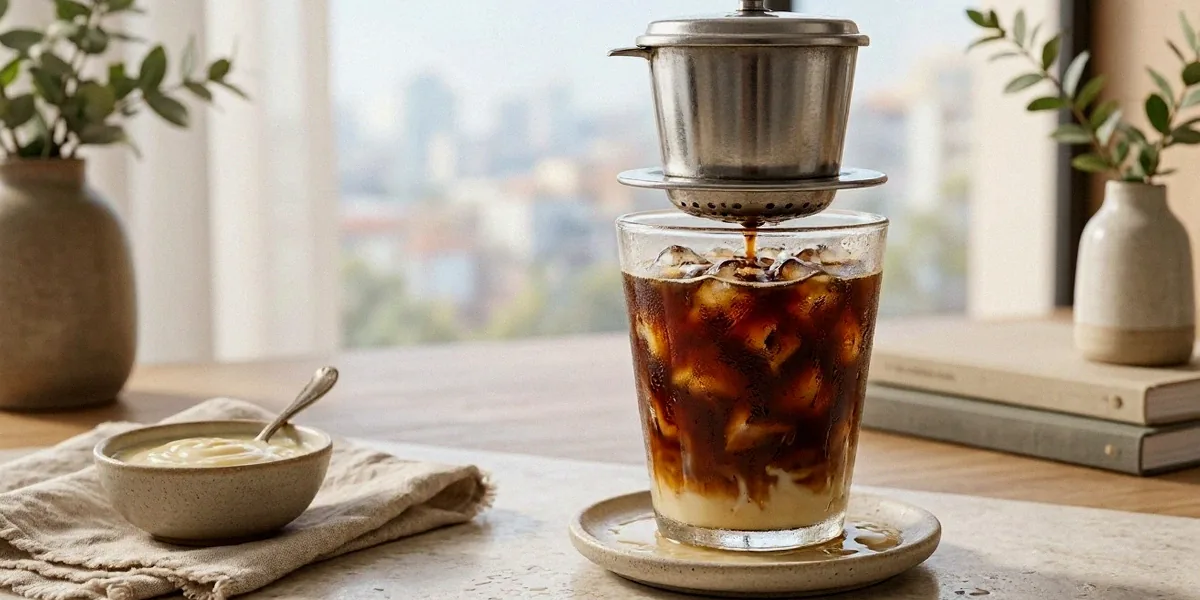
Vietnamese Iced Coffee at Home: A Simple Guide for Aussie Food Lovers
You’ve just finished a steaming bowl of pho, the broth clinging to the last of the noodles, and there’s only one thing left to do — order a cà phê sữa đá. That first sip hits: dark, syrupy, ice-cold, and sweet enough to wake you up twice. Then you get home, crave it again on a Tuesday afternoon, and realise you have no idea how to make it yourself. Good news: you don’t need a cafe, a fancy machine, or a plane ticket to Vietnam. With a $10 phin filter and a tin of condensed milk, you can make a proper Vietnamese iced coffee at home in about five minutes. Here’s how we do it.
Why We Love Vietnamese Iced Coffee
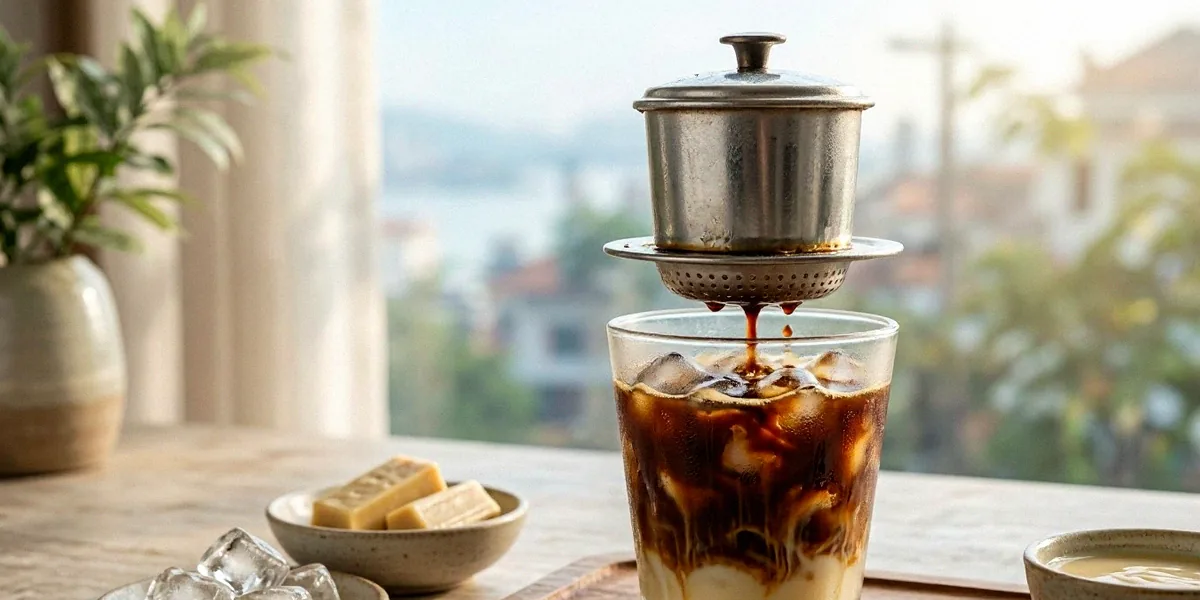
Vietnamese iced coffee, known as cà phê sữa đá, is one of those drinks that punches well above its weight. It’s made from just three things — coffee, water, and sweetened condensed milk — yet it delivers a flavour profile that most espresso bars can’t match. The magic comes from robusta beans, which are traditionally used for a stronger, less acidic brew than the arabica most Australians are used to. The result is a coffee that tastes like dark chocolate and toasted nuts, with a thick, almost caramel-like body thanks to the condensed milk.
It’s also deeply woven into Australian food culture. From the Vietnamese bakeries of Cabramatta and Bankstown to the pho joints of Richmond and Inala, cà phê sữa đá is as standard as a flat white is in a Surry Hills cafe. Ordering one after a bowl of pho is practically a ritual.
The Perfect Balance of Strong and Sweet
What makes Vietnamese iced coffee so addictive is the tension between bitter and sweet. Robusta coffee is bold and slightly bitter, and sweetened condensed milk is rich and sugary. Neither works alone — but together, poured over ice, they balance out into something smooth and almost dessert-like. The phin filter plays a role too: because it’s a slow drip, the coffee extracts gently and never turns harsh or burnt.
A Refreshing Finish to Any Pho Meal
If you’ve ever eaten a big bowl of pho on a hot day, you’ll know the feeling: satisfied but slightly overheated. A Vietnamese iced coffee is the perfect reset. The cold, sweet, coffee hit cuts through the richness of the broth and leaves you feeling refreshed rather than sluggish. It’s also a great palate cleanser before you dive into a plate of bun bo Hue or a banh mi.
Essential Ingredients and Equipment
You only need a handful of items to make Vietnamese iced coffee at home, and most of them are cheap and easy to find in Australia. Here’s our basic shopping list.
- Coffee: Vietnamese robusta coffee, ideally pre-ground for phin use. Trung Nguyen coffee brand is widely available in Australian Asian grocers, and Nguyen Coffee Supply is another solid option online.
- Sweetened condensed milk: Longevity sweetened condensed milk is a popular choice in Australia, though you’ll also see brands like Vinamilk and Nestlé on shelves.
- Phin filter: A small stainless steel Vietnamese drip filter. Phin filters can be purchased at Asian supermarkets like Cabramatta or online for under $15.
- Glass or cup: A clear glass is ideal so you can watch the drip and see the layers form.
- Spoon: For stirring, and for pressing the phin filter’s inner lid down.
- Ice: Plenty of it. Big, clear cubes melt slower and won’t water down your coffee.
Choosing the Right Coffee: Robusta vs Arabica
Robusta beans are traditionally used for a stronger, less acidic brew. They contain roughly twice the caffeine of arabica and have a more pronounced, earthy flavour that stands up to condensed milk. Arabica will work in a pinch, but the drink will taste flatter and less like the real thing. If you can, buy a blend labelled “Vietnamese style” or “phin grind” — it’ll be ground to the right coarseness for the filter.
The Phin Filter: Your Secret Weapon
The phin is a small metal filter that sits on top of your glass. It has four parts: the cup, the filter plate, the press, and the lid. Coffee goes in, hot water goes on top, and gravity does the rest. The slow drip — usually four to five minutes — is what gives Vietnamese coffee its signature smoothness. A paper filter or French press will work, but the texture won’t be quite the same.
Sweetened Condensed Milk: Brand Recommendations
Longevity sweetened condensed milk is a popular choice in Australia and is the one we reach for most often. It’s thick, not too sweet, and has a slightly caramelised note that pairs beautifully with robusta. Vinamilk is another reliable option, and if you want a dairy-free version, coconut condensed milk works surprisingly well.
Step-by-Step Recipe for Vietnamese Iced Coffee
Here’s our go-to recipe. It makes one generous glass — enough to share, but you probably won’t want to.
- Preheat the phin: Rinse the phin filter and glass with hot water, then discard. This keeps the coffee warm as it drips.
- Add condensed milk: Spoon 2 tablespoons of sweetened condensed milk into the bottom of your glass.
- Add coffee: Place the phin on top of the glass and add 2 tablespoons of ground robusta coffee. Shake gently to level it.
- Bloom: Pour about 20ml of hot water (just off the boil, around 90–95°C) over the coffee and wait 30 seconds. The grounds will swell.
- Brew: Press the inner lid down lightly, then fill the phin with 120ml of hot water. Cover with the lid and let it drip for 4–5 minutes.
- Stir: Remove the phin and stir the coffee into the condensed milk until fully combined.
- Pour over ice: Fill a separate glass with ice and pour the coffee mixture over the top. Serve immediately.
Brewing with a Phin Filter
The trick with the phin is patience. Don’t press the inner lid down too hard — you want a slow, steady drip, not a fast stream. If the coffee drips through in under three minutes, your grind is too coarse. If it takes longer than six, it’s too fine. Aim for a drip rate of about one drop per second.
Assembling and Serving Over Ice
Always pour the hot coffee over fresh ice, not the other way around. This keeps the layers distinct and stops the ice from melting too quickly. If you like your coffee extra cold, chill the condensed milk in the fridge beforehand.
Adjusting Sweetness and Strength
Two tablespoons of condensed milk is our starting point, but everyone’s sweet tooth is different. For a less sweet drink, use one tablespoon. For a stronger kick, add an extra half-tablespoon of coffee. If you want it creamier, stir in a splash of fresh milk or cream before pouring over ice.
Tips and Tricks for the Perfect Cup
Once you’ve made it a few times, you’ll start to notice small things that make a big difference. Here are the ones that matter most.
- Use freshly ground coffee. Pre-ground coffee loses its oils quickly. If you can, grind whole robusta beans the same day you brew.
- Preheat the phin and glass. A cold phin will drop the brew temperature and leave you with a weak cup.
- Use filtered water. Australian tap water varies a lot — Sydney’s is soft, Adelaide’s is harder. Filtered water gives you a cleaner, more consistent flavour.
- Don’t overfill the phin. Leave a small gap between the coffee and the rim so the water can distribute evenly.
Grind Size and Water Temperature
Vietnamese coffee should be ground medium-coarse, similar to sea salt. Too fine and the water won’t pass through; too coarse and it’ll rush through and taste thin. Water should be just off the boil — around 90–95°C. Boiling water will scorch the grounds and add bitterness.
Avoiding a Weak or Bitter Brew
Weak coffee usually means the grind is too coarse or the water wasn’t hot enough. Bitter coffee usually means the grind is too fine or you used boiling water. Adjust one variable at a time and you’ll dial it in within a couple of brews.
Make-Ahead and Storage Tips
You can brew the coffee concentrate ahead of time and keep it in the fridge for up to three days. Just don’t add the ice until you’re ready to serve. Ground coffee should be stored in an airtight container away from light and heat — not in the fridge, where moisture will ruin it.
Variations and Modern Twists
The classic cà phê sữa đá is hard to beat, but there’s plenty of room to play. Here are a few variations we love.
Dairy-Free and Vegan Options
Swap the condensed milk for coconut condensed milk or oat-based sweetened creamer. The flavour shifts slightly — coconut adds a tropical note — but the drink still works beautifully. Many trendy Australian cafes in Melbourne and Sydney now offer a vegan cà phê sữa đá, often with a coconut-milk base.
Egg Coffee: A Hanoi Specialty
Cà phê trứng is a Hanoi invention: a shot of strong Vietnamese coffee topped with a whipped, fluffy egg yolk and condensed milk foam. It’s rich, custardy, and served hot in a small glass. Some Vietnamese cafes in Australia have started serving it, but it’s easy to make at home too — just whisk an egg yolk with condensed milk until pale and thick, then spoon it over your coffee.
Flavoured Syrups and Spices
A dash of vanilla extract, a pinch of cinnamon, or a spoonful of pandan syrup can transform your iced coffee. We’re also seeing more Australian cafes experiment with salted caramel and hazelnut versions, though purists will tell you the original is still the best.
Câu Hỏi Thường Gặp (FAQ)
Can I make Vietnamese iced coffee without a phin filter?
Yes. A French press or a pour-over dripper will work, though the texture will be slightly different. If you’re using a French press, steep the coffee for four minutes, then press slowly and pour over ice.
Where can I buy a phin filter in Australia?
Phin filters can be purchased at Asian supermarkets like Cabramatta, Bankstown, or Richmond, and online from retailers like Amazon Australia or specialty Vietnamese grocers. They usually cost between $8 and $20.
Is Vietnamese iced coffee stronger than espresso?
In terms of caffeine, yes — robusta beans contain roughly twice the caffeine of arabica. A single phin brew can have 100–150mg of caffeine, compared to around 60–80mg in a standard espresso shot.
Can I use regular coffee instead of Vietnamese robusta?
You can, but the flavour will be noticeably different. Robusta beans are traditionally used for a stronger, less acidic brew, and they’re what gives cà phê sữa đá its signature punch. If you must substitute, use a dark espresso blend and increase the amount slightly.
How long does brewed Vietnamese coffee last in the fridge?
Brewed coffee concentrate will keep for up to three days in an airtight container in the fridge. After that, it starts to taste stale and flat. Always add ice and condensed milk fresh.
Making Vietnamese iced coffee at home is one of those small kitchen wins that pays off every single time. It’s cheap, it’s fast, and it turns an ordinary afternoon into something that tastes like a trip to Hanoi — or at least a trip to your favourite pho spot in Cabramatta. Grab a phin filter, a tin of Longevity, and a bag of Trung Nguyen, and you’re set. And once you’ve mastered the pour, you’ll never look at a takeaway iced coffee the same way again.