
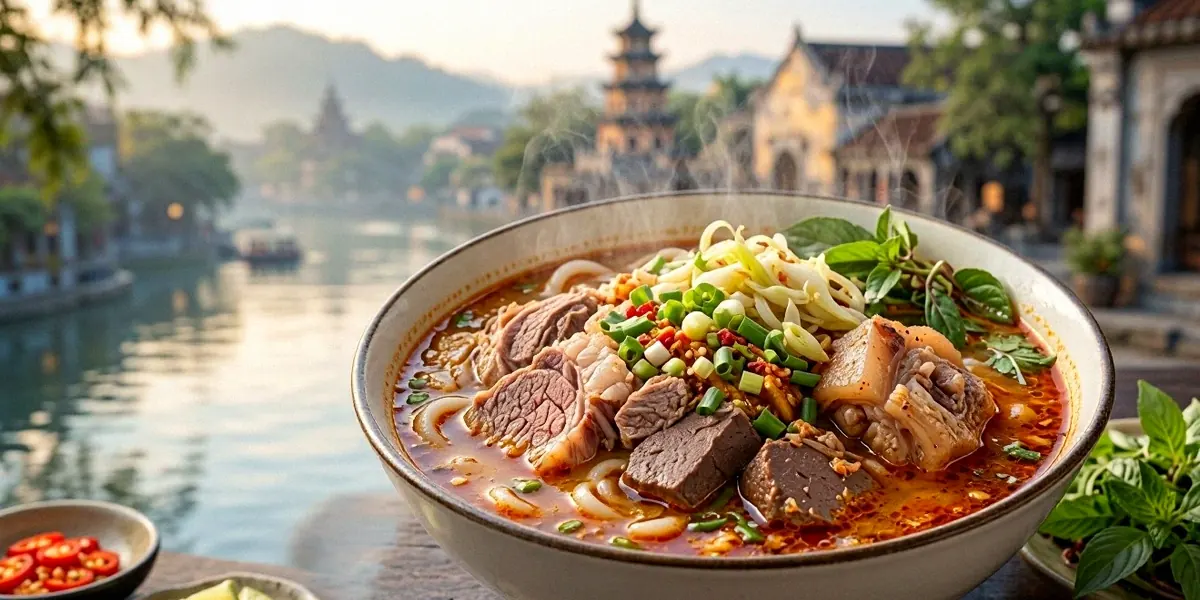
Bun Bo Hue: Pho’s Spicy Cousin
Walk down the main street of any Australian city and you’ll spot a pho shop within minutes. We love the stuff — the gentle anise-and-cinnamon broth, the mountain of herbs, the slurp-worthy flat noodles. But there’s another Vietnamese noodle soup that regulars at Cabramatta and Richmond swear by, and it rarely gets the spotlight it deserves. Bun bo Hue is pho’s bold, spicy cousin: a lemongrass-scented, chilli-oil-slicked beef noodle soup from central Vietnam that hits completely differently. Once you’ve tried a proper bowl, we reckon you’ll be hooked.
What Is Bun Bo Hue?
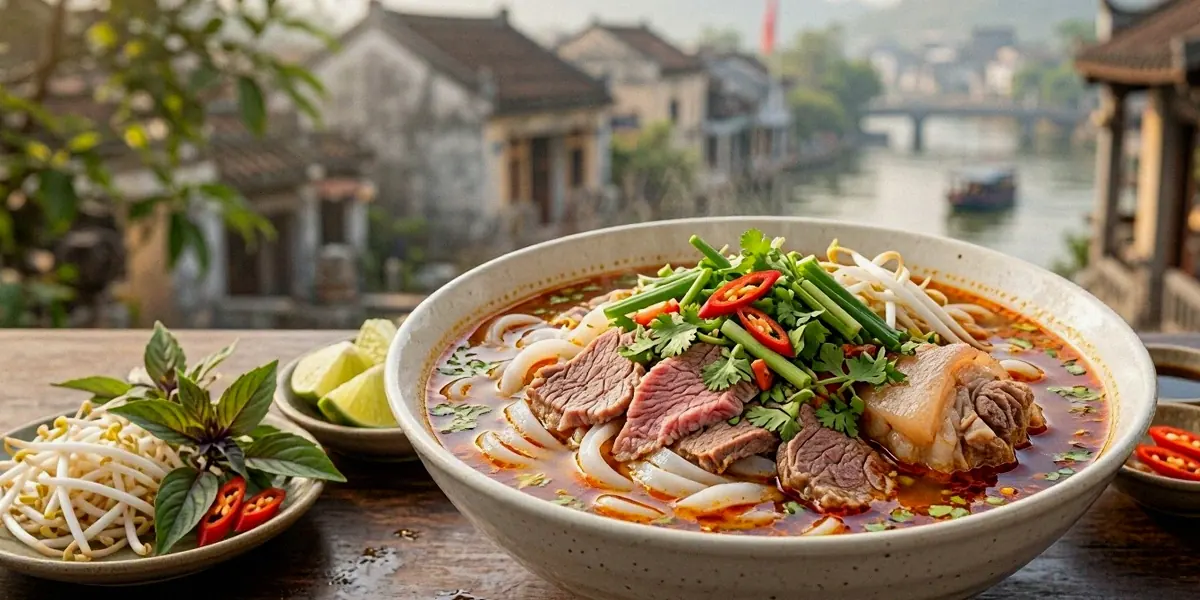
Bun bo Hue is a spicy beef noodle soup that originates from the city of Hue, Vietnam — once the imperial capital and still the country’s culinary heartland. Unlike pho, which is built on flat rice noodles and a clear, gently spiced broth, bun bo Hue uses thick round rice noodles (called bun) and a broth that’s punched up with lemongrass, shrimp paste and chilli oil. It’s richer, funkier and noticeably hotter, and it typically includes pork knuckle and beef shank — cuts that set it apart from pho’s thinly sliced beef.
The Origins and Royal History
Hue was the seat of the Nguyen dynasty from 1802 to 1945, and the city’s cuisine reflects that royal pedigree. Dishes from this region are known for being complex and highly seasoned, and bun bo Hue is no exception. The name literally means “beef noodles from Hue,” though the dish is also made with pork — a nod to its working-class evolution alongside its aristocratic roots. In Hue itself, you’ll find vendors simmering giant pots from dawn, ladling bowls for everyone from cyclo drivers to office workers.
Key Ingredients That Define the Dish
What separates bun bo Hue from every other noodle soup on the block comes down to a handful of signature ingredients:
- Lemongrass — bruised and simmered into the broth, giving it that unmistakable citrus aroma.
- Shrimp paste (mam ruoc) — the funky, umami backbone that makes the broth taste deeply savoury.
- Chilli oil (satay) — annatto seeds and chilli give the broth its signature red-orange colour and heat.
- Pork knuckle and beef shank — slow-simmered until tender, then sliced and piled on top of the noodles.
- Thick round rice noodles — chewy, slippery and sturdy enough to hold up to the bold broth.
- Banana blossom, mint, coriander and lime — the fresh garnishes that cut through the richness.
Bun Bo Hue vs. Pho: What’s the Difference?
If you’re a pho devotee wondering whether bun bo Hue is worth branching out for, the short answer is yes — but they’re genuinely different soups. Pho is the subtle one: a clear broth scented with star anise, cloves and cinnamon, served with flat rice noodles and rare beef. Bun bo Hue is the loud one: a spicy, lemongrass-heavy broth with round noodles and a mix of beef and pork. Pho is far more common across Australia, but bun bo Hue is quietly gaining traction in Vietnamese-heavy suburbs.
Noodles and Broth: A Side-by-Side Comparison
Pho uses banh pho — flat, wide rice noodles that soak up broth quickly. Bun bo Hue uses bun — thick, round rice noodles, more like a Vietnamese spaghetti. The broth is where the real divergence happens: pho simmers beef bones with charred ginger, onion and warm spices for a clean, almost tea-like clarity. Bun bo Hue simmers beef and pork bones with lemongrass, shrimp paste and chilli oil, producing a cloudy, reddish broth that’s richer and more aggressively seasoned.
Flavor Profiles: Subtle vs. Bold
We think of pho as comfort food — the kind of bowl you can eat any day of the week without breaking a sweat. Bun bo Hue is a weekend bowl, or a cure for a cold, or something to order when you want your tastebuds properly woken up. The heat level varies by restaurant, but a good version should have a slow-building chilli warmth, a hit of fermented shrimp funk, and a bright lemongrass finish. If pho is a gentle hug, bun bo Hue is a firm handshake.
Where to Find the Best Bun Bo Hue in Australia
The good news for Australian food lovers is that you don’t need to fly to Hue to get a proper bowl. Our major cities have thriving Vietnamese communities, and bun bo Hue is a staple on many menus — especially in the suburbs where Vietnamese restaurants cluster.
Sydney: Cabramatta and Beyond
Cabramatta in Sydney’s south-west is a hub for authentic bun bo Hue, and it’s where we’d send anyone chasing their first serious bowl. The strip along John Street is packed with Vietnamese eateries, and Pho Tau Bay — a Cabramatta institution — is a reliable starting point, though plenty of neighbouring spots do excellent versions too. Further afield, Bankstown and Marrickville also have solid options.
Melbourne: Richmond and Footscray
Richmond in Melbourne has a high concentration of Vietnamese restaurants serving bun bo Hue, particularly along Victoria Street. Co Do is a long-standing favourite, and you’ll find plenty of competition within a few blocks. Over in Footscray, the Vietnamese presence is just as strong, with smaller, family-run spots often turning out deeply traditional broths.
Brisbane and Other Cities
In Brisbane, head to Inala — the city’s Vietnamese heartland — where bun bo Hue appears on menus alongside pho and com tam. Adelaide’s Woodville and Perth’s Girrawheen also have pockets of excellent Vietnamese cooking. Wherever you are, the rule is simple: if a restaurant serves a strong pho, ask about the bun bo Hue. If it’s on the menu, it’s usually worth ordering.
How to Make Bun Bo Hue at Home
Cooking bun bo Hue from scratch is a project — we won’t pretend otherwise — but it’s a rewarding one, and shortcuts exist if you’d rather not spend all day at the stove. The broth is the whole game, so that’s where your effort should go.
Essential Ingredients and Where to Buy Them
Most of what you need is available at Asian grocers, and increasingly at the big supermarkets too — Asian grocers like Woolworths and Coles often stock bun bo Hue paste, which is a genuine time-saver. Look for:
- Beef bones (leg or marrow) and pork bones
- Pork knuckle and beef shank
- Fresh lemongrass stalks
- Shrimp paste (mam ruoc)
- Bun bo Hue paste or pre-made chilli satay
- Dried bun (round rice noodles)
- Fish sauce, rock sugar, annatto oil
- Banana blossom, mint, coriander, lime, sliced onion
Step-by-Step Broth Making
- Blanch the beef and pork bones in boiling water for 5 minutes, then drain and rinse to remove impurities.
- Return bones to a clean pot with fresh water, bruised lemongrass stalks and a whole onion.
- Simmer gently for 2–3 hours, skimming the surface regularly.
- Stir in shrimp paste, bun bo Hue paste (or your own chilli satay), fish sauce and a little rock sugar.
- Add the pork knuckle and beef shank in the last hour so they poach until tender without falling apart.
- Taste and adjust: you want salty, spicy, fragrant and slightly funky in equal measure.
Assembling and Serving
Cook the dried bun noodles according to the packet, then divide between deep bowls. Slice the cooked beef shank and pull the pork knuckle meat off the bone, piling both on top of the noodles. Ladle over the hot broth, then finish with sliced onion, banana blossom, mint, coriander, a squeeze of lime and extra chilli oil for anyone who wants more heat. A side of extra shrimp paste on the table lets everyone adjust the funk to their taste.
Why Bun Bo Hue Deserves a Spot in Your Rotation
We’re not asking anyone to give up pho — that would be madness. But bun bo Hue offers something pho can’t: a complex, spicy, deeply savoury alternative that rewards adventurous eaters. It’s the bowl to order when you want more than comfort; when you want a broth that challenges you a little. Its popularity in Australia is growing steadily, and with good reason — the Vietnamese communities in Cabramatta, Richmond and Inala have been quietly perfecting it for decades. Try it at your local Vietnamese spot, or make a weekend of it and cook a pot at home. Either way, you’ll understand why it’s more than just a spicier pho.
FAQ
Is bun bo Hue spicier than pho?
Yes, noticeably. Bun bo Hue is built on chilli oil and lemongrass, so it has a slow-building heat that pho simply doesn’t have. You can usually ask for it mild, but expect some warmth regardless.
What’s the difference between bun bo Hue and pho noodles?
Pho uses flat, wide rice noodles (banh pho), while bun bo Hue uses thick, round rice noodles (bun). The round noodles are chewier and hold up better against the heavier broth.
Can I buy bun bo Hue paste in Australia?
Absolutely. Asian grocers like Woolworths and Coles often stock bun bo Hue paste, and any dedicated Asian supermarket will carry it. It’s a legitimate shortcut that saves hours of prep.
Where can I find authentic bun bo Hue in Sydney?
Cabramatta in Sydney’s south-west is the best place to start — it’s a hub for authentic bun bo Hue, with Pho Tau Bay and many neighbouring restaurants serving traditional versions.
Does bun bo Hue always contain pork?
Traditionally, yes. The dish typically includes pork knuckle and beef shank, which is one of the things that distinguishes it from pho. Some modern versions skip the pork, but the classic bowl includes both.