
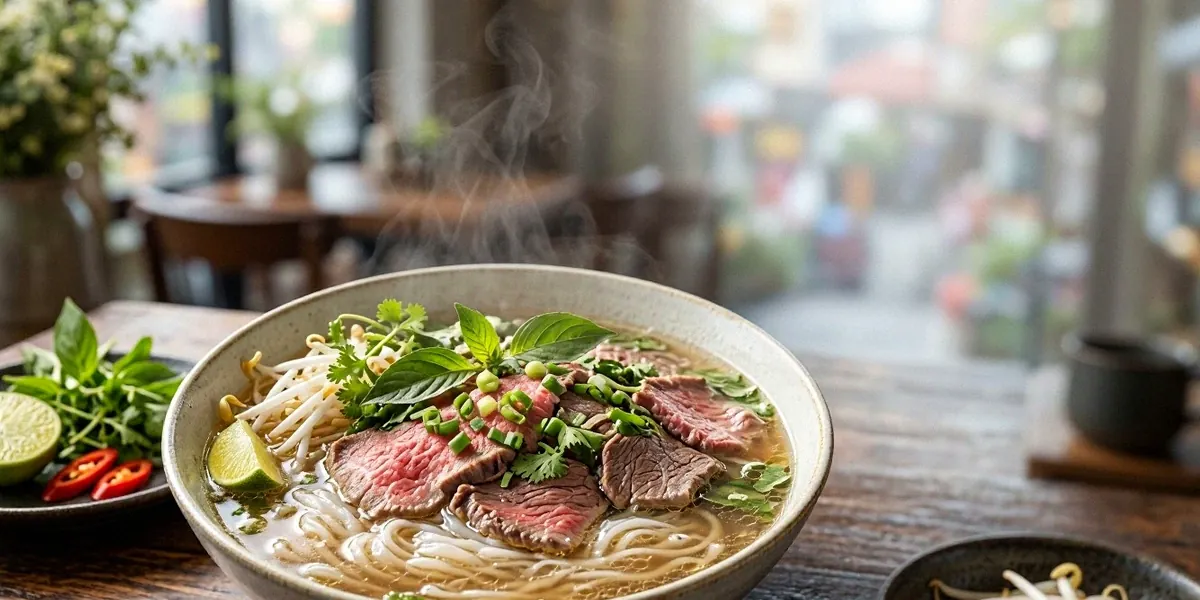
Phockheads – Pho and Vietnamese Noodle Soups
It’s 7am on a Saturday in Richmond, and the queue outside the restaurant is already snaking past the door. Inside, steam curls off bowls of amber broth, plates of Thai basil and bean sprouts land on laminate tables, and the sound of slurping fills the room like applause. That first spoonful — rich, aromatic, faintly sweet with a whisper of star anise — is the reason our team started Phockheads. We’re a group of Australian food lovers who have spent years chasing the perfect bowl of pho, from the bustling streets of Melbourne’s Victoria Street to the family-run eateries tucked away in Sydney’s western suburbs. We’ve burned our tongues on broth that simmered for twelve hours, argued passionately about Hanoi versus Saigon style, and learned to pronounce “bun bo Hue” properly (it’s “boo-un baw hway,” roughly). This blog is where we share everything we’ve learned: where to eat, how to cook, and why Vietnamese noodle soups have become such an essential part of how Australians eat. So grab a spoon, pull up a plastic stool, and let’s talk broth.
The Soul of Vietnam in a Bowl: Understanding Pho
Pho is deceptively simple. At its core, it’s just broth, noodles, meat and herbs. But anyone who has tasted a truly great bowl knows that simplicity is a lie — the magic is in the details, and those details have been refined over more than a century. Pho as we know it is a relatively modern creation, emerging in northern Vietnam in the early 20th century, likely influenced by French colonial cooking (the word may derive from “pot-au-feu,” though Vietnamese linguists still debate this). What started as a street food in Hanoi’s working-class neighbourhoods has become Vietnam’s most famous culinary export, and Australia has embraced it wholeheartedly.
Walk into any pho restaurant in Melbourne, Sydney, Brisbane or Perth and you’ll see the same ritual: a plate of fresh herbs, a wedge of lime, maybe some sliced chilli, and a bowl of broth so clear you can see the bottom. The broth is everything. Traditionally it’s made by simmering beef bones — leg bones, knuckles, oxtail — for anywhere from six to twelve hours, along with charred onion and ginger, star anise, cinnamon, cloves, cardamom and coriander seed. The result is a broth that’s deeply savoury but not heavy, perfumed with spice but never overwhelmed by it.
For those of us who want a shortcut on a weeknight, brands like Quoc Viet Foods have become a staple in Australian Asian grocers. Their pho broth bases and soup bases are a legitimate time-saver — not the same as a twelve-hour simmer, but perfectly respectable when you’re craving a bowl after work. We’ll get into the from-scratch method later, but it’s worth knowing that even Vietnamese home cooks in Australia keep a jar or two in the pantry for emergencies.
Fresh herbs are non-negotiable. Thai basil, with its faint aniseed note, is the classic accompaniment, along with sawtooth coriander (also called culantro or ngo gai), which has a sharper, more pungent flavour than regular coriander. Sawtooth coriander is easy to find in Vietnamese grocers around Cabramatta, Richmond and Inala — look for the long, serrated leaves. Bean sprouts add crunch, lime adds acidity, and hoisin and sriracha wait on the side for those who want them (though purists in Hanoi would rather you didn’t).
Hanoi vs. Saigon Pho: What’s the Difference?
If you’ve eaten pho in both Hanoi and Ho Chi Minh City, you’ll know they’re practically different dishes wearing the same name. The northern style, born in Hanoi, is austere and elegant. The broth is clear and light, seasoned primarily with fish sauce and a restrained hand of spice. The noodles are flat and slightly wider. The meat is usually thinly sliced rare beef (pho tai) or brisket, and the bowl comes with very few garnishes — maybe a few spring onions, a splash of vinegar, some chilli on the side. Hanoi locals will tell you that piling in hoisin sauce is a crime against broth.
Southern pho, from Saigon (Ho Chi Minh City), is bigger, sweeter and more generous. The broth tends to be darker and richer, often with rock sugar added for balance and a wider array of spices. The garnish plate is enormous — Thai basil, bean sprouts, sawtooth coriander, lime, chilli — and hoisin and sriracha are expected on the table. Southern pho also features a wider range of cuts: rare beef, brisket, flank, tendon, tripe and meatballs, often all in the same bowl as pho dac biet (the “special”).
In Australia, the southern style dominates, largely because most Vietnamese-Australian families trace their roots to the south, arriving after 1975. That’s why the pho you’ll find in Richmond or Bankstown usually comes with a mountain of herbs and a generous pour of hoisin. But a handful of northern-style specialists have opened in recent years, particularly in Melbourne and Sydney, catering to diners who want that cleaner, more restrained broth. Our advice: try both, and don’t let anyone tell you one is “correct.”
Essential Ingredients for Authentic Pho
If you’re building a pho from scratch, here’s what you need in your kitchen. We’ve broken it into broth, bowl and garnish so you can shop with purpose.
- Beef bones: Leg bones, knuckles, oxtail and marrow bones. Coles and Woolworths often stock beef bones in the meat section, but for the best selection and price, head to a proper butcher or an Asian grocer. Ask for a mix — marrow for richness, knuckles for body.
- Charred aromatics: Brown onion and fresh ginger, halved and charred under a grill or on a dry pan until blackened at the edges. This is the single biggest flavour upgrade you can make.
- Whole spices: Star anise, cinnamon stick, cloves, black cardamom, coriander seed and fennel seed. Toast them briefly before adding to the pot.
- Fish sauce: Ayam is the brand most of us reach for — it’s widely available in Australian supermarkets and has a clean, well-balanced flavour. Three Crabs is another favourite if you can find it.
- Rock sugar: The classic sweetener. Palm sugar works too.
- Rice noodles: Flat, dried banh pho noodles. Look for brands from Vietnam or Thailand.
- Meat for the bowl: Eye of round or sirloin sliced paper-thin for rare beef, plus brisket, flank, tendon or meatballs if you want the full experience.
- Garnishes: Thai basil, sawtooth coriander, coriander, spring onion, bean sprouts, lime wedges, sliced red chilli.
- Condiments: Hoisin sauce and sriracha (or fresh chilli) on the side.
How to Eat Pho Like a Local
There’s an art to eating pho, and it’s not just about the ingredients — it’s about technique. Here’s how we’ve learned to do it after years of watching, asking and (occasionally) being gently corrected by restaurant owners.
- Taste the broth first. Before you add anything, take a spoonful of the broth as it comes. This tells you how the kitchen has balanced it, and whether it needs anything at all.
- Add herbs gradually. Don’t dump the entire plate of Thai basil into the bowl at once. Tear leaves and add them as you eat, so they stay fresh and fragrant.
- Use the lime, skip the hoisin (at first). A squeeze of lime brightens the broth. Hoisin is sweet and thick and can mask the subtle spice notes — try the first few spoonfuls without it.
- Slurp. Yes, really. Slurping aerates the broth and cools the noodles. It’s also considered a compliment to the cook in Vietnam.
- Use both chopsticks and spoon. Chopsticks for noodles and meat, spoon for broth. Don’t be shy about switching between them.
- Finish the bowl. Leaving broth behind is a small tragedy. If you’re full, at least have a few more spoonfuls.
Beyond Pho: Exploring Bun Bo Hue and Other Vietnamese Noodle Soups
Pho gets the headlines, but Vietnam has a whole universe of noodle soups, each with its own personality. Once you’ve fallen in love with pho, the next step is to branch out — and the rewards are enormous. From the fiery, lemongrass-scented broth of bun bo Hue to the crab-and-tomato tang of bun rieu and the turmeric-yellow noodles of mi quang, these soups show just how diverse Vietnamese cooking really is.
Bun Bo Hue: The Spicy Queen of Noodle Soups
If pho is the elegant elder sibling, bun bo Hue is the loud, charismatic one who arrives at the party with a bottle of something strong. Hailing from the old imperial city of Hue in central Vietnam, this soup is defined by its broth: beef and pork bones simmered with lemongrass, chilli oil and shrimp paste, giving it a deep red colour and a complex, spicy, savoury flavour that’s completely different from pho. The noodles are round rice vermicelli (bun), thicker and chewier than pho noodles, and the bowl typically includes beef shank, pork hock, congealed pork blood (yes, really — it’s delicious) and sometimes banana blossom.
The garnishes are just as important: shredded banana blossom, mint, Thai basil, bean sprouts, lime and plenty of fresh chilli. A good bun bo Hue should be spicy enough to make your forehead glisten, but not so hot that you can’t taste the lemongrass and shrimp paste underneath. It’s a balancing act, and the best versions in Australia nail it.
Bun Rieu and Mi Quang: Lesser-Known Gems
Bun rieu is the comfort food of Vietnamese noodle soups. Its broth is built on tomatoes and crab (traditionally paddy crab, but in Australia often mud crab or a crab paste), giving it a tangy, savoury, slightly sweet character. The bowl includes round vermicelli, fried tofu, sometimes snails, and a generous topping of spring onion and coriander. It’s lighter than bun bo Hue and less famous than pho, but for many Vietnamese-Australians it’s the bowl that tastes like home.
Mi quang comes from central Vietnam, specifically Quang Nam province, and it’s a different beast again. The noodles are wide, flat and yellow (coloured with turmeric), served with just a small amount of broth rather than swimming in it. Toppings vary but often include prawns, pork, boiled egg and peanuts, with rice crackers crumbled on top for crunch. It’s a drier, more textural soup, and it’s slowly gaining fans in Australia — look for it at central-Vietnamese specialists in Cabramatta, Springvale and Inala.
Other soups worth seeking out include bun mam (fermented fish noodle soup, an acquired taste but beloved in the Mekong Delta), banh canh (thick tapioca noodles in a pork or crab broth), and the southern classic hu tieu, which blends Chinese and Vietnamese influences with clear pork broth and chewy tapioca noodles.
Where to Find the Best Bun Bo Hue in Australia
Cabramatta in Sydney is the undisputed heartland of Vietnamese food in Australia, and it’s where we’d send anyone looking for an authentic bowl of bun bo Hue. The suburb’s John Street and the surrounding laneways are packed with restaurants, bakeries and grocers, and the bun bo Hue at places like Minh Phat has a reputation that stretches well beyond western Sydney. The broth is dark, spicy and deeply aromatic, and the garnishes arrive in a heap big enough to feed a small family.
In Melbourne, the equivalents are Richmond’s Victoria Street and Springvale’s shopping strip, both of which have excellent bun bo Hue if you know where to look. Brisbane’s Inala and Perth’s Girrawheen and Cannington also have strong Vietnamese communities with restaurants that serve it properly. Our tip: if a restaurant offers bun bo Hue as a special rather than a permanent menu item, order it — that’s usually a sign the kitchen cares about doing it right.
Our Favorite Pho Spots Across Australia: From Melbourne to Sydney
We’ve eaten a lot of pho. It’s a tough job, but someone has to do it. Over the years, we’ve developed a shortlist of places that consistently deliver — not just good pho, but pho that makes you want to come back the following week. Here’s our rundown, city by city.
Melbourne’s Pho Scene: Richmond and Footscray
Melbourne’s pho heartland is Victoria Street in Richmond, a long strip of restaurants, grocers and bakeries that has been the centre of Vietnamese-Australian food culture since the 1980s. The most famous name is Pho Dzung Tan Dinh, renowned for its beef pho and its no-frills, high-turnover approach. The broth is clean and beefy, the noodles are generous, and the tables turn fast — which is exactly what you want. We’ve been going for years, and the quality has barely wavered. Order the pho dac biet (special beef pho) with extra rare beef on the side, and don’t skip the Vietnamese iced coffee afterwards.
Footscray, in Melbourne’s inner west, is the other essential stop. The Footscray Market and the surrounding streets are packed with Vietnamese eateries, and the pho here tends to be a little more home-style — smaller portions, more personal service, and broth that tastes like someone’s grandmother made it. Our favourite move is to hit the market for herbs and noodles in the morning, then grab a bowl for lunch at one of the small restaurants nearby.
Sydney’s Best Pho: Bankstown and Cabramatta
Sydney’s pho scene is split between the southwest and the west, with Bankstown and Cabramatta as the twin capitals. Pho Pasteur in Bankstown is a long-standing favourite — the broth is rich and aromatic, the beef is tender, and the portions are generous. It’s the kind of place where you walk in, order in thirty seconds, and have a bowl in front of you within five minutes. Perfect for a quick lunch or a late-night craving.
Cabramatta, meanwhile, is less about a single restaurant and more about the whole experience. Wander down John Street, duck into any of the dozens of Vietnamese eateries, and you’ll find pho that ranges from good to exceptional. The suburb is also the best place in Australia to buy the ingredients you need to make pho at home — fresh rice noodles, Thai basil, sawtooth coriander, beef bones and every condiment you can imagine. If you’re serious about Vietnamese food, a trip to Cabramatta is essential.
Brisbane and Perth: Hidden Pho Treasures
Brisbane’s Vietnamese food scene centres on Inala, in the city’s southwest, where the Inala Plaza and surrounding streets are packed with restaurants and grocers. The pho here is excellent — often a little sweeter and more southern in style — and the prices are some of the most reasonable in the country. Sunnybank, another southern suburb, also has a strong Vietnamese presence and a handful of standout pho spots.
Perth’s Vietnamese community is smaller but no less passionate. Girrawheen and Cannington are the main hubs, with restaurants serving pho that leans southern in style — rich broth, generous herbs, plenty of hoisin on the table. The pho scene in Perth has grown significantly over the past decade, and there are now dozens of excellent bowls to be found if you know where to look. Our advice: ask a local, or follow the crowds. If a restaurant is full of Vietnamese families at lunchtime, you’re in the right place.
Mastering Pho at Home: Recipes, Tips, and Tricks
Making pho at home is one of the most rewarding cooking projects you can take on. It’s not difficult, but it is time-consuming — the broth needs hours, and the ingredients need a bit of planning. The payoff is a pot of broth that fills your kitchen with the smell of star anise and charred ginger, and bowls that rival anything you’d get in a restaurant. Here’s how we do it.
Our Signature Pho Broth Recipe
This recipe makes about 4 litres of broth, enough for 6 to 8 generous bowls. You’ll need a large stockpot — at least 8 litres — and a bit of patience.
Ingredients:
- 2 kg beef bones (a mix of marrow, knuckle and oxtail)
- 500 g beef brisket or chuck, for slicing later
- 2 large brown onions, halved
- 1 large piece fresh ginger (about 10 cm), halved lengthwise
- 4 star anise
- 1 cinnamon stick
- 4 cloves
- 2 black cardamom pods
- 1 tbsp coriander seeds
- 1 tsp fennel seeds
- 3 tbsp Ayam fish sauce (or to taste)
- 30 g rock sugar
- Salt, to taste
- Fresh rice noodles, herbs and meat for serving
Method:
- Parboil the bones. Place the bones in a large pot, cover with cold water, bring to a boil and simmer for 10 minutes. Drain and rinse the bones under cold water. This removes impurities and gives you a clearer broth.
- Char the aromatics. While the bones parboil, char the onion and ginger under a hot grill or on a dry frying pan until blackened at the edges. This takes about 10 minutes and is essential for depth of flavour.
- Toast the spices. In a dry pan, toast the star anise, cinnamon, cloves, cardamom, coriander seeds and fennel seeds until fragrant — about 1 minute. Tie them in a piece of muslin or a spice bag.
- Simmer the broth. Return the rinsed bones to the clean pot, add the charred onion and ginger, the spice bag, and about 6 litres of cold water. Bring to a gentle simmer — not a rolling boil — and skim any scum that rises to the surface.
- Add the brisket. After 1 hour, add the brisket or chuck. Simmer for another 1.5 to 2 hours, until the meat is tender. Remove the brisket, cool it, and slice it thinly against the grain. Keep it in the fridge until serving.
- Season the broth. After a total of 3 to 4 hours (or up to 6 for a richer broth), strain the broth through a fine sieve. Discard the solids. Add the fish sauce, rock sugar and salt to taste. The broth should be savoury, slightly sweet and aromatic — adjust until it tastes right to you.
- Assemble the bowls. Cook the rice noodles according to the packet instructions, drain, and divide between bowls. Top with sliced brisket and paper-thin slices of raw beef (the hot broth will cook them). Pour over boiling-hot broth. Serve with Thai basil, sawtooth coriander, bean sprouts, lime, chilli, hoisin and sriracha.
If you’re short on time, a Quoc Viet Foods pho broth base can get you most of the way there — just doctor it with charred ginger, a star anise or two and a splash of Ayam fish sauce. It won’t be the same as a from-scratch broth, but it’s a perfectly good weeknight shortcut.
Essential Equipment for Pho Making
You don’t need much specialised gear, but a few pieces make the process easier and the results better.
- A large stockpot (8 litres or more). You need room for bones, water and aromatics without the pot overflowing.
- A fine-mesh strainer or muslin cloth. For straining the broth at the end.
- A spice bag or muslin. Keeps whole spices contained so you can fish them out easily.
- A sharp knife. Essential for slicing beef paper-thin. A partially frozen piece of beef is easier to slice thinly.
- A grill or gas burner. For charring the onion and ginger.
- A ladle and a large serving spoon. For assembling bowls.
- Deep bowls. Pho bowls are large for a reason — you want room for noodles, meat, broth and garnishes.
Common Mistakes to Avoid
We’ve made all of these at some point, so learn from our pain.
- Boiling the broth too hard. A rolling boil makes the broth cloudy and can make it taste muddy. Keep it at a gentle simmer.
- Skipping the parboil. If you don’t parboil the bones, you’ll end up with scum and impurities in the broth. It’s a five-minute step that makes a huge difference.
- Not charring the aromatics. Raw onion and ginger give a sharp, harsh flavour. Charring brings out sweetness and depth.
- Over-seasoning early. Add fish sauce and sugar near the end, after straining. You can always add more, but you can’t take it out.
- Using too many spices. Star anise and cinnamon are powerful. Too much and the broth tastes like mulled wine. Start with the quantities above and adjust.
- Slicing the beef too thick. The beef should be thin enough to cook in the hot broth. If it’s too thick, it’ll be chewy.
- Forgetting the herbs. Pho is as much about the fresh garnishes as the broth. Don’t skip the Thai basil and sawtooth coriander.
The Health Benefits and Cultural Significance of Vietnamese Noodle Soups
Vietnamese noodle soups aren’t just delicious — they’re also a window into Vietnamese culture and, in many cases, a genuinely nourishing meal. In Australia, where Vietnamese-Australian communities have been part of the fabric since the 1970s, these soups carry both nutritional and cultural weight. Let’s look at both.
Nutritional Breakdown: What’s in Your Bowl?
A typical bowl of pho with beef is a balanced meal in its own right. The broth provides hydration and minerals from the bones, the beef provides protein and iron, the noodles provide carbohydrates, and the herbs and bean sprouts add fibre, vitamins and antioxidants. A standard bowl of beef pho contains roughly 350 to 500 calories, depending on the cut of meat and the amount of noodles — a reasonable lunch or dinner, especially if you go easy on the hoisin and sriracha.
Bun bo Hue is richer, thanks to the pork hock and beef shank, and the chilli oil adds fat and heat. It’s a heavier meal, but also deeply satisfying and packed with protein. Bun rieu, with its tomato and crab base, is lighter and lower in fat, while mi quang is more carb-heavy because of the generous noodle portion.
From a health perspective, the standout features of Vietnamese noodle soups are:
- High protein content from beef, pork, chicken or seafood.
- Plenty of fresh herbs and vegetables, which add vitamins A, C and K, plus antioxidants.
- Bone broth, which contains collagen, gelatin and minerals — though claims about its health benefits are often overstated.
- Relatively low fat, especially if you skim the broth and choose lean cuts of meat.
- Gluten-free in most cases, since rice noodles are naturally gluten-free (check condiments if you’re sensitive).
Of course, pho is also high in sodium, largely from the fish sauce and salt used in the broth. If you’re watching your salt intake, ask for less fish sauce or make your broth at home where you can control the seasoning.
Vietnamese Noodle Soups in Australian Culture
Vietnamese noodle soups have become part of the Australian food landscape in a way that few immigrant cuisines have achieved. In Melbourne, Sydney, Brisbane and Perth, pho is as common as a meat pie or a flat white — and in some suburbs, more common. The Vietnamese-Australian community, many of whom arrived as refugees after the fall of Saigon in 1975, has built thriving food precincts in Richmond, Cabramatta, Inala, Springvale and Girrawheen, and those precincts have become destinations for all Australians.
Festivals play a big role in this cultural exchange. The Tet Festival in Sydney, which celebrates Vietnamese New Year (Lunar New Year), draws tens of thousands of visitors each year to Fairfield Showground. Food stalls featuring pho, bun bo Hue, banh mi and other Vietnamese classics are among the biggest drawcards, and the festival has become a key event in Sydney’s multicultural calendar. Similar celebrations take place in Melbourne, Brisbane and Perth, often organised by local Vietnamese community associations.
For many Vietnamese-Australians, pho is more than food — it’s a connection to home, a way of remembering grandparents and family meals, and a dish that’s passed down through generations. For the rest of us, it’s a gift: a cuisine that’s become part of our own food culture, and one that keeps giving.
How to Host a Pho Party
A pho party is one of the easiest and most impressive ways to feed a crowd. The broth can be made ahead, the garnishes are mostly raw, and everyone assembles their own bowl at the table. Here’s how we do it.
- Make the broth a day ahead. Pho broth actually improves overnight, as the flavours meld. Make it the day before, cool it, and refrigerate. Skim off any fat that solidifies on top before reheating.
- Set up a garnish station. Plates of Thai basil, sawtooth coriander, coriander, bean sprouts, lime wedges, sliced chilli and spring onion. Let guests help themselves.
- Prepare the meats. Have sliced rare beef, cooked brisket, meatballs and any other toppings ready in separate bowls. Keep the rare beef in the fridge until the last minute.
- Cook the noodles fresh. Rice noodles are best cooked just before serving. Have a pot of boiling water ready and cook them in batches.
- Keep the broth at a rolling simmer. It needs to be hot enough to cook the raw beef when poured over. A portable burner at the table works beautifully.
- Don’t forget the drinks. Vietnamese iced coffee, fresh coconut water, beer or a light lager all work well. Some guests will want tea.
- Finish with something sweet. Che (Vietnamese sweet soups) or fresh tropical fruit make a perfect ending.
A pho party is also a great way to introduce friends to Vietnamese food. Let them build their own bowl, and they’ll quickly discover what they like. It’s communal, generous and fun — everything that Vietnamese food is about.
FAQ
What’s the difference between pho and bun bo Hue?
Pho is a beef-based noodle soup with a clear, aromatic broth seasoned with star anise, cinnamon and charred ginger, served with flat rice noodles. Bun bo Hue is a spicy, lemongrass-and-chilli-rich beef and pork noodle soup from central Vietnam, served with round rice vermicelli and typically including pork hock, beef shank and sometimes congealed pork blood. The broth is darker, spicier and more complex than pho.
Where can I find the best pho in Australia?
It depends on your city. In Melbourne, Pho Dzung Tan Dinh in Richmond is renowned for its beef pho, and Footscray has excellent home-style options. In Sydney, Pho Pasteur in Bankstown is a long-standing favourite, and Cabramatta is a hub for authentic Vietnamese cuisine. Brisbane’s Inala and Perth’s Girrawheen and Cannington also have strong pho scenes. Our advice: follow the crowds and trust the locals.
Can I make pho at home without a twelve-hour simmer?
Yes. A from-scratch broth benefits from a long simmer, but you can get a very good result in three to four hours. If you’re really short on time, brands like Quoc Viet Foods make pho broth bases that are widely available in Australian Asian grocers and can be doctored with charred ginger, star anise and Ayam fish sauce for a quick weeknight bowl.
What herbs should I use with pho?
Thai basil and sawtooth coriander (ngo gai) are the classic choices, along with regular coriander, spring onion and bean sprouts. Sawtooth coriander has a sharper, more pungent flavour than regular coriander and is worth seeking out at Vietnamese grocers. Lime wedges and sliced chilli are also standard, and hoisin and sriracha are optional condiments.
Is pho healthy?
Pho is a balanced meal in moderation. It provides protein from beef, carbohydrates from rice noodles, and vitamins and antioxidants from fresh herbs and vegetables. It’s also relatively low in fat if you choose lean cuts and skim the broth. The main caveat is sodium — fish sauce and salt make pho fairly high in salt, so if you’re watching your intake, ask for less seasoning or make your broth at home.
Phockheads is a community for Australian food lovers who share a passion for pho and Vietnamese noodle soups. Whether you’re a seasoned slurper or a curious first-timer, we invite you to explore the restaurants, cook the recipes and connect with others who love these bowls as much as we do. Try a new spot this week, make a pot of broth on the weekend, or host a pho party for your friends — and tell us how it goes. The bowl is always better when it’s shared.
Latest articles
- Where to Find Great Pho in Sydney and Melbourne
 Where to Find Great Pho in Sydney and Melbourne We still remember our first proper bowl of pho. It was a cold,… Read more: Where to Find Great Pho in Sydney and Melbourne
- Vietnamese Iced Coffee at Home
 Vietnamese Iced Coffee at Home: A Simple Guide for Aussie Food Lovers You’ve just finished a steaming bowl of pho, the broth… Read more: Vietnamese Iced Coffee at Home
- Vegan Pho That Still Tastes Rich
 Vegan Pho That Still Tastes Rich: A Bowl of Comfort Without the Meat It’s a cool Sunday evening in Melbourne, and the… Read more: Vegan Pho That Still Tastes Rich
- Pressure-Cooker Pho Broth
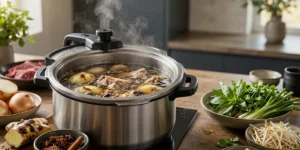 Pressure-Cooker Pho Broth: The Fast Track to Authentic Flavour We’ve all been there — staring down a recipe that demands a twelve-hour… Read more: Pressure-Cooker Pho Broth
- Pho Garnishes Explained
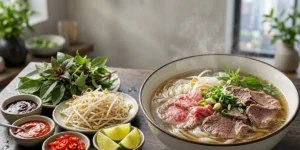 Pho Garnishes Explained: The Ultimate Guide to Vietnamese Herbs and Accents There’s a moment every pho lover knows well. The steaming bowl… Read more: Pho Garnishes Explained
- Pho 101: Broth, Noodles and Herbs
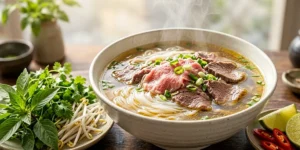 Pho 101: Broth, Noodles and Herbs It’s a chilly Tuesday night in Melbourne and we’re tucked into a tiny restaurant in Richmond,… Read more: Pho 101: Broth, Noodles and Herbs