
Vegan Pho That Still Tastes Rich: A Bowl of Comfort Without the Meat
It’s a cool Sunday evening in Melbourne, and the kitchen smells like a street corner in Hanoi. Star anise and cinnamon are toasting in a dry pan, onion and ginger are blackening under the grill, and a pot of broth is ticking away on the stove. Then comes the question every plant-based cook hits eventually: how do you get that deep, savoury, lip-sticking richness without beef bones or fish sauce? We’ve spent months testing, tasting, and occasionally over-salting, and we’re confident we’ve cracked it. This is our formula for a vegan pho that doesn’t taste like vegetable stock with noodles floating in it. It tastes like pho.
Why Vegan Pho Often Falls Flat (And How We Fix It)
Traditional pho gets its power from three sources: collagen and marrow from bones, salt and umami from fish sauce, and the smoky sweetness of charred aromatics. Strip those out and you’re left with a broth that smells right but tastes thin. We’ve eaten plenty of vegan pho that nails the aroma and completely misses the body. The good news is that all three pillars can be rebuilt with plants, and once you know the tricks, the result stands on its own rather than apologising for what’s missing.
The Umami Gap: What’s Missing Without Bones and Fish Sauce
Bones contribute gelatin, which gives broth that slightly viscous, coating texture, plus glutamates from the marrow. Fish sauce adds a fermented, salty punch of umami that ties everything together. Remove both and you lose mouthfeel and depth at the same time. Our fix is to attack the gap from multiple angles: dried shiitake mushrooms for guanylate, kombu for glutamate, fermented soybean paste or vegan fish sauce for that funky salinity, and a long simmer to concentrate whatever we’ve built. Layering matters more than any single ingredient.
Our Three Pillars of Rich Vegan Broth: Char, Ferment, Simmer
Every good vegan pho we’ve made comes down to these three moves. Char gives sweetness and smoke. Ferment gives umami and complexity. Simmer gives time for everything to marry. Skip any one of them and you’ll notice. Do all three and you’ll have guests asking whether there’s really no beef in the pot.
Building the Broth: Aromatics, Spices, and Secret Weapons
The broth is 80 per cent of the work and 100 per cent of the result. Get it right and the toppings are just decoration. Here’s how we build ours, with ingredients you can actually find in Australia.
Charring Onion and Ginger: The Step You Can’t Skip
Halve two large brown onions and a 10cm piece of ginger, then char them cut-side down in a dry cast-iron pan, or under a hot grill, until the edges are blackened and the kitchen smells sweet and smoky. This takes about 8 to 10 minutes. The charred surfaces add a caramelised depth that raw aromatics simply can’t produce, and it’s the closest plant-based equivalent to the roasted bones in a traditional broth.
Spice Blend: Toasting and Balancing Star Anise, Cinnamon, and Cloves
Toast your whole spices in a dry pan for 60 to 90 seconds before they hit the pot. Our blend for four litres of water:
- 4 whole star anise
- 1 cinnamon stick, roughly snapped
- 4 cloves
- 1 tablespoon coriander seeds
- 2 green cardamom pods, lightly crushed
- 1 teaspoon fennel seeds (optional, but we like it)
Star anise should lead, cinnamon should support, and cloves should whisper. If cloves dominate, the broth turns medicinal fast.
Umami Boosters: Dried Shiitake, Kombu, and Fermented Bean Paste
Add 8 to 10 dried shiitake mushrooms and a 10cm piece of kombu to the pot. Keep the heat below a boil while the kombu is in, then remove it after 30 minutes to avoid sliminess. For the fermented hit, we use either 2 tablespoons of fermented soybean paste or a generous splash of Ayam brand vegan fish sauce, which is widely available in Australian supermarkets and does a convincing impression of the real thing. Macro Organic vegetable stock is our backup if we want a little extra backbone without overpowering the aromatics. Simmer everything for at least 90 minutes, ideally closer to two hours. Strain, season with salt and a touch of rock sugar, and taste before you serve.
Noodles and Toppings: The Australian Pantry Approach
Once the broth is sorted, the rest is assembly. Fresh noodles beat dried every time, and Australia has no shortage of good Asian grocers.
Choosing the Right Rice Noodles: Fresh vs Dried
Fresh rice noodles can be found at Asian grocers like Tan Viet in Sydney and Laguna in Melbourne. They’re softer, silkier, and take about 30 seconds in boiling water. Dried banh pho noodles work fine as a backup; look for the wide, flat ones and soak them in warm water for 20 minutes before a quick blanch.
Plant-Based Proteins: Tofu Puffs, Mushrooms, and Tempeh
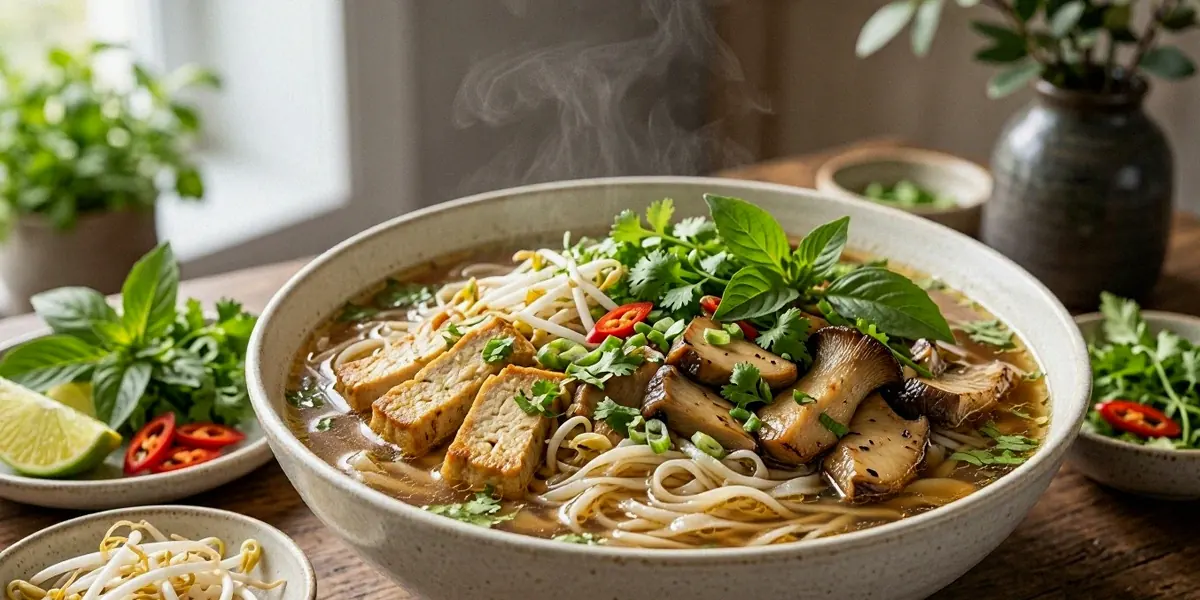
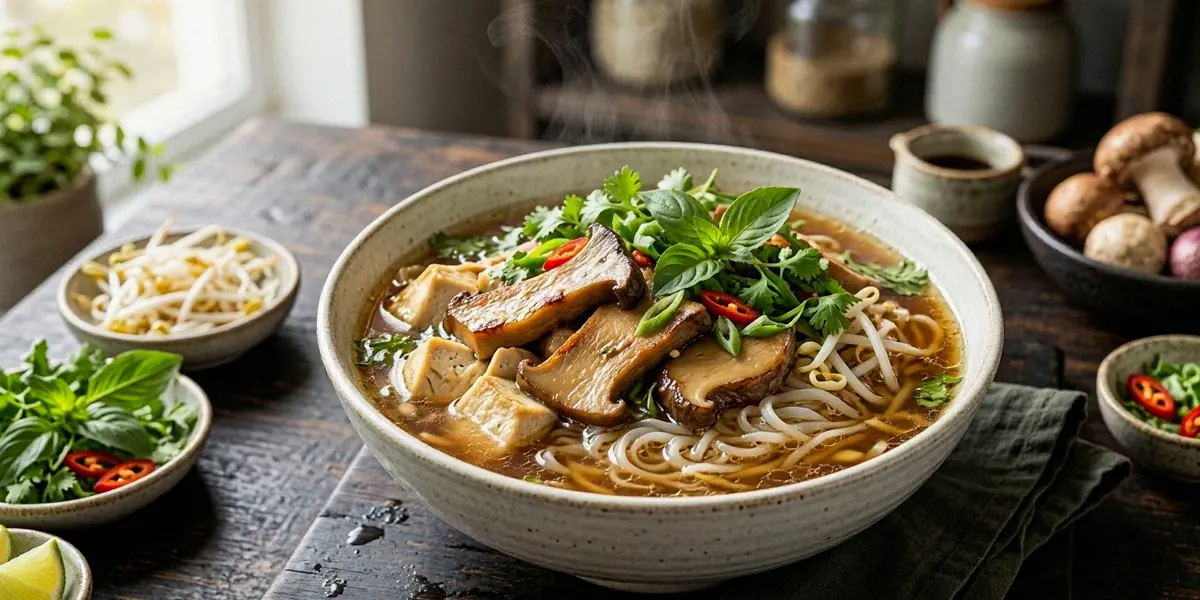
We load our bowls with tofu puffs (they soak up broth like sponges), sliced king oyster mushrooms seared hard in a hot pan, and thin strips of tempeh for something meatier. Fried shallots on top are non-negotiable.
Fresh Herbs and Garnishes: What to Pile on Top
Bean sprouts, Thai basil, coriander, lime wedges, sliced red chilli, and a few rings of white onion. For sauces, we reach for vegan hoisin and sriracha; both are easy to find, and most mainstream brands are already plant-based.
Our Step-by-Step Vegan Pho Recipe
This serves 4 and takes about 2 hours, most of it hands-off.
Ingredients List (Australian Measurements)
- 4L water
- 2 brown onions, halved and charred
- 10cm ginger, charred
- 8 dried shiitake mushrooms
- 10cm kombu
- 4 star anise, 1 cinnamon stick, 4 cloves, 1 tbsp coriander seeds, 2 cardamom pods
- 2 tbsp fermented soybean paste or Ayam vegan fish sauce
- 1 tbsp rock sugar, salt to taste
- 400g fresh rice noodles
- 200g tofu puffs, 150g king oyster mushrooms, 150g tempeh
- Herbs, bean sprouts, lime, chilli, hoisin, sriracha
Method: From Charring to Serving
- Char onions and ginger, toast spices, then add everything except noodles and toppings to the pot.
- Simmer gently for 90 to 120 minutes. Remove kombu at the 30-minute mark.
- Strain, then season with salt and rock sugar until the broth tastes rounded, not flat.
- Blanch noodles briefly, divide into bowls, top with proteins, and ladle over boiling broth.
- Pile on herbs, sprouts, lime, and chilli. Serve immediately.
Make-Ahead and Storage Tips
The broth keeps in the fridge for four days and freezes beautifully for three months. Noodles and herbs should always be prepped fresh on the day. Reheat the broth to a rolling boil before pouring.
Tasting Notes and Variations: Bun Bo Hue and Beyond
Once you’ve nailed the base, the variations open up fast. Vietnamese cuisine is regional and endlessly adaptable, and Australia’s Vietnamese communities in Cabramatta, Richmond, and Inala are the best inspiration you’ll find.
Spicy Vegan Bun Bo Hue: A Sister Soup
Bun bo Hue is a spicy Vietnamese noodle soup that can be adapted to vegan with lemongrass and chilli. Add two bruised lemongrass stalks, extra chilli, and a spoonful of chilli oil to the broth, and swap the rice noodles for thicker round ones. The result is bolder, hotter, and every bit as satisfying.
Regional Twists: Southern vs Northern Style Broths
Southern broths tend to be sweeter and more heavily spiced, while northern versions are cleaner and more savoury. Try both and pick your lane, or split the difference.
Where to Eat Vegan Pho in Australia (And What We Learned)
We ate a lot of bowls while developing this recipe. Here’s where the standouts were.
Melbourne: Vegan Kitchen and Other Favourites
Vegan Kitchen in Melbourne serves a pho with a broth that genuinely surprised us: deep, aromatic, and not shy with the star anise. Richmond is a goldmine for ingredients if you want to recreate it at home.
Sydney: Golden Lotus and Cabramatta Finds
Golden Lotus in Sydney is a reliable name for vegan pho, and a wander through Cabramatta will sort out every dried mushroom, noodle, and sauce you could want.
Brisbane: Quan 88 and Beyond
Quan 88 in Brisbane rounds out our picks, with a broth that leans northern in style. Inala is the suburb to explore for supplies.
FAQ
Can vegan pho taste as rich as the traditional version?
Yes, if you char your aromatics, use fermented umami sources like soybean paste or vegan fish sauce, and simmer for at least 90 minutes. The depth comes from layering, not from bones.
Where can I buy fresh rice noodles in Australia?
Asian grocers like Tan Viet in Sydney and Laguna in Melbourne stock them. Cabramatta and Richmond are also excellent for fresh noodles and Vietnamese pantry staples.
Is Ayam vegan fish sauce easy to find?
Yes, Ayam brand vegan fish sauce is widely available in Australian supermarkets, usually in the Asian foods aisle.
How do I make a vegan bun bo Hue?
Start with our vegan pho broth, then add bruised lemongrass, extra chilli, and chilli oil, and swap in thicker round rice noodles. Bun bo Hue is a spicy Vietnamese noodle soup that adapts beautifully to a plant-based kitchen.
How long does the broth keep?
Up to four days in the fridge, or three months frozen. Reheat to a rolling boil before serving.
Vegan pho doesn’t have to be a compromise. With char, ferment, and a long simmer, you get a broth that’s soulful, aromatic, and every bit as comforting as the bowl you grew up with. Make it yours, tweak the spice blend, pile on the herbs, and enjoy.