
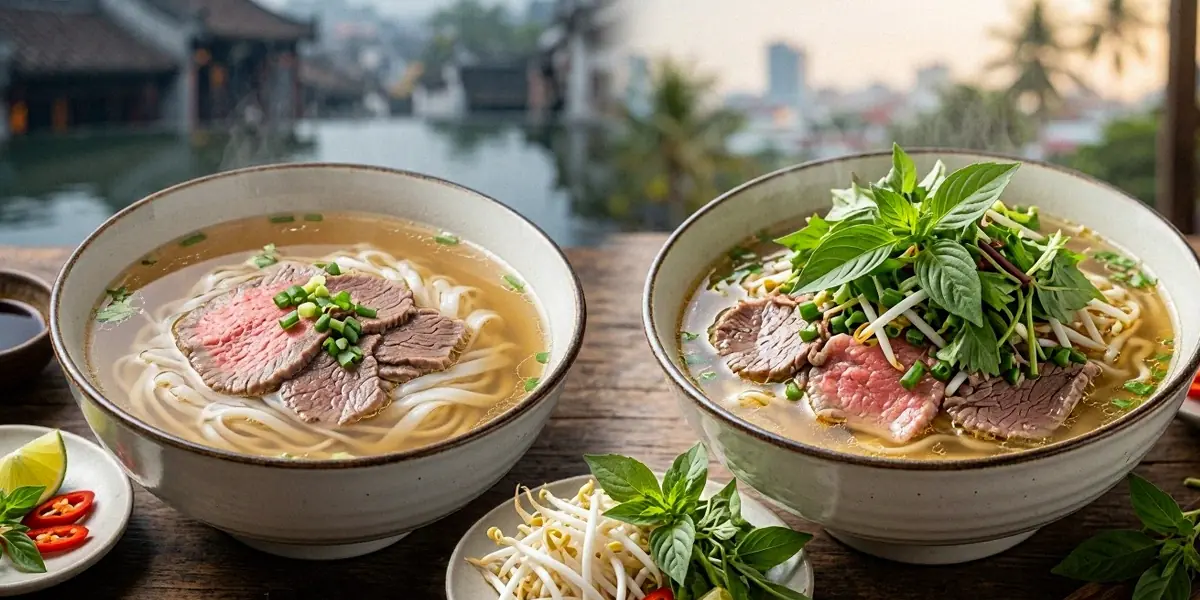
Northern vs Southern Pho: Two Bowls, One Love
Steam curls off a bowl set down in front of you at a packed eatery on Victoria Street in Melbourne or along Bankstown’s bustling strips in Sydney. The aroma of star anise and charred ginger hits first, then the tangle of rice noodles, then the slow, satisfying slurp. It’s a ritual thousands of Australians share every week. But have you ever noticed how different bowls of pho can taste? Order the same dish at two restaurants and you might get a crystal-clear broth that whispers of beef and fish sauce, or a sweeter, deeper brew loaded with cinnamon and rock sugar. That’s not inconsistency — it’s geography. Pho carries the fingerprints of two very different regions of Vietnam, and understanding that split transforms how you eat it.
The Origins of Pho: A Tale of Two Regions
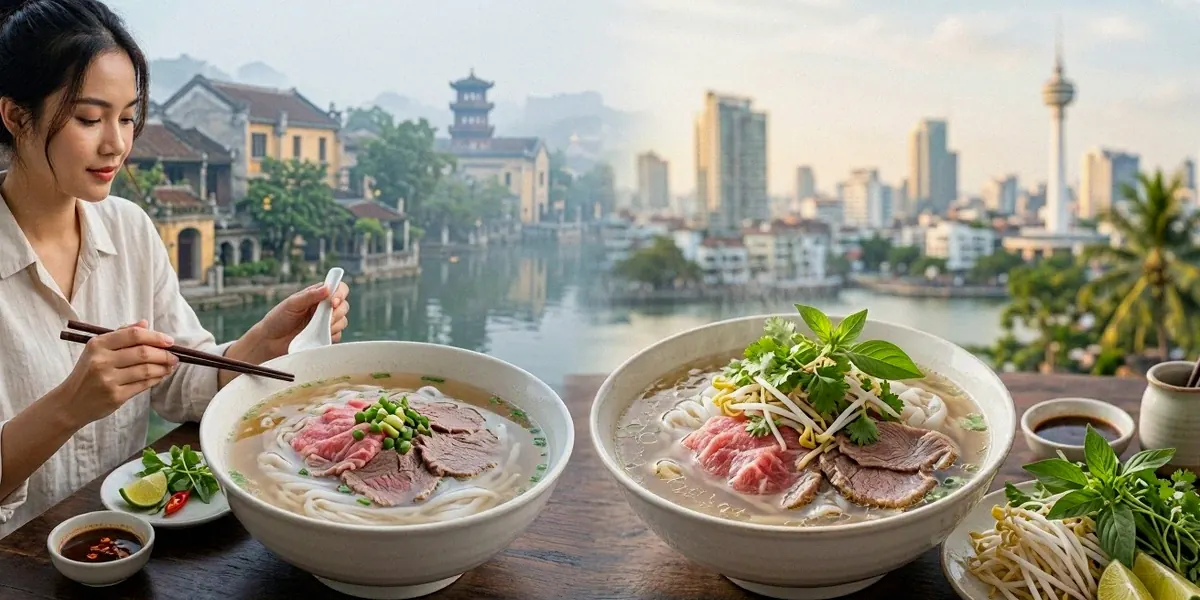
Pho originated in Nam Dinh province in Northern Vietnam in the early 20th century, a product of French colonial influences and Chinese migration that converged on the Red River Delta. The French brought their love of beef and the technique of charring onions and ginger for stock; Chinese communities contributed rice noodles and the vocabulary of the dish itself. From Nam Dinh and nearby Hanoi, pho spread south — first as a street food, then as a national obsession. The decisive moment came after 1954, when the Geneva Accords divided Vietnam and hundreds of thousands of northerners migrated south. They brought their recipes with them, and in Saigon, pho met a pantry full of sugar, herbs, and Southern abundance. Two distinct schools were born.
Hanoi’s Traditional Pho Bac
In Hanoi, pho bac is treated with near-religious restraint. The broth is beef, bone, and not much else — sometimes chicken in pho ga — seasoned lightly with fish sauce and salt. The bowl is small by Southern standards, the noodles thin and flat, and the toppings limited to sliced beef, spring onion, and maybe a few slivers of chilli. No herb plate, no bean sprouts, no sauces on the table. Hanoians argue that adding anything else masks the broth, and after one sip of a well-made Northern bowl, it’s hard to disagree.
Saigon’s Pho Nam and the Southern Evolution
Southern pho, or pho nam, evolved under different pressures: a hotter climate, more arable land for herbs and vegetables, and a local palate that leans sweet. The broth gets rock sugar, a wider spice blend, and often chicken alongside beef bones. The bowl grows bigger, the noodles slightly wider, and the meat selection expands to brisket, flank, tendon, and meatballs. And then there’s the garnish — a plate of Thai basil, mint, bean sprouts, and lime that arrives automatically, a signature of Southern pho and, for many Australians, the thing we love most about it.
Broth: Clear and Subtle vs Rich and Bold
The broth is where the two styles diverge most dramatically, and it’s the first thing our team tastes when we’re comparing bowls. Order a pho bac at Pho Hung in Melbourne and you’ll notice how clean it drinks — no sweetness, no heavy spice, just beef and a faint marine hum from fish sauce. Order a Southern bowl at Pho Pasteur in Sydney and the difference is immediate: rounder, sweeter, more aromatic, with star anise and cinnamon pushing forward.
Northern Broth: Clean, Savory, No Distractions
Northern broth is simmered for hours, skimmed obsessively, and seasoned at the end. Charred ginger and onion go in, along with a modest amount of star anise, clove, and coriander seed — but the goal is clarity, not complexity. The result is a broth you could almost drink like consommé. It’s savoury rather than salty, with a long beefy finish and no sugar to round off the edges. Skimming is constant; a cloudy Northern broth is considered a flaw.
Southern Broth: Sweet, Aromatic, and Complex
Southern cooks add rock sugar — sometimes a lot of it — plus a broader spice mix including cinnamon, star anise, cloves, cardamom, and coriander seed. More bones, more fat, and often a longer simmer produce a darker, richer liquid. The sweetness isn’t dessert-sweet; it’s the kind of roundness that makes the broth feel fuller in the mouth. It’s the style most Australians grew up with, because most of our pho shops trace their lineage to Saigon rather than Hanoi.
Noodles, Meat, and Garnishes: What Goes in the Bowl
The construction of the bowl matters as much as the broth. Noodle width, meat cuts, and the presence or absence of a herb plate are the quickest visual tells for which style you’re eating.
- Northern: thin, flat rice noodles; rare sliced beef and sometimes brisket; spring onion and chilli only.
- Southern: slightly wider noodles; brisket, flank, tendon, tripe, and meatballs; a full herb plate with Thai basil, mint, bean sprouts, and lime.
- Bun bo Hue: thick round rice noodles, beef shank, pork knuckle, lemongrass, and chilli oil — a different beast entirely.
For fresh noodles, we often pick up packets from Vinh Phat in Sydney’s Cabramatta, where the turnover is fast and the texture is consistently good. Fresh noodles cook in seconds and hold the broth better than dried, which matters most in a Southern bowl where the noodles sit longer while you add herbs and sauces.
Northern Style: Thin Noodles and Simple Toppings
Hanoi-style bowls are minimalist. The beef is sliced paper-thin and often added raw, cooking in the hot broth as it reaches the table. There’s no herb plate — a few coriander leaves or a squeeze of lime is as far as it goes. The bowl is smaller, and the ratio of broth to noodle is higher, so every mouthful is about the liquid.
Southern Style: Wider Noodles and Abundant Herbs
Southern bowls are generous. You’ll get a heap of noodles, multiple cuts of beef, and a plate of herbs that turns the dish into something closer to a salad-soup hybrid. Tearing Thai basil into the bowl, adding bean sprouts for crunch, and squeezing lime over the top is standard practice. It’s a more interactive meal, and for many of us, that’s the appeal.
How to Order and Eat Pho Like a Local
Ordering well is half the experience. Here’s how we approach it, based on years of slurping across Australia’s Vietnamese enclaves.
- Taste the broth before you add anything. If it’s a Northern bowl, that first sip may be all you need.
- Add herbs and bean sprouts gradually — they wilt fast in hot broth.
- Use hoisin and sriracha sparingly, and dip your meat rather than dumping sauce into the bowl.
- Slurp. It cools the noodles, aerates the broth, and is entirely acceptable at any pho shop worth its salt.
- Finish with a spoon of broth to close the meal.
Pho 88 in Brisbane is a great place to test these habits — the staff are used to first-timers and will happily guide you if you ask.
Northern Etiquette: Keep It Simple
In the Northern tradition, the bowl arrives ready. No hoisin, no sriracha, no herb plate. If you ask for sauces, you may get a puzzled look. The point is to taste the broth as the cook intended, and adding condiments is seen as a comment on the kitchen.
Southern Customisation: Sauce It Up
Southern pho typically includes hoisin sauce and sriracha on the table, while Northern pho is eaten without them. In the South, mixing a little hoisin into a side dish for dipping — or even into the bowl — is completely normal. It’s a habit many Australian diners have inherited, and there’s no shame in it. Just taste the broth first.
Bun Bo Hue: The Spicy Cousin You Should Know
Once you’ve mapped the North-South pho divide, the next bowl to chase is bun bo Hue. It’s a spicy beef noodle soup from Hue in Central Vietnam, often served with lemongrass and shrimp paste, and it borrows from both pho traditions while going its own way.
What Sets Bun Bo Hue Apart
The broth is built on beef and pork bones with heavy hits of lemongrass and chilli oil, giving it a red-orange sheen and a heat that pho never delivers. Shrimp paste adds a funky depth you either love immediately or learn to love. The noodles are thick, round, and slippery — closer to udon than to pho’s flat ribbons. Toppings include beef shank, pork knuckle, and sometimes congealed pork blood, with banana blossom and mint on the side.
Where to Try It in Australia
Cabramatta in Sydney is the spiritual home of bun bo Hue in this country, and the dedicated bun bo Hue shops along John Street do it properly. Melbourne’s Richmond and Springvale also deliver, and Brisbane’s Inala has a handful of gems. If you like pho but wish it had more bite, this is your next order.
Our Verdict: Which Pho Is Right for You?
There’s no winner here — only preferences. If you’re a purist who wants to taste beef, bone, and technique without interference, start with a Northern bowl. If you love big flavours, herbs, and the freedom to customise, the Southern style will feel like home. Many of us keep both in rotation depending on mood and weather. A cold Melbourne evening calls for a Southern bowl with everything; a quick lunch in Sydney often calls for a Northern bowl and nothing else.
FAQ
What’s the main difference between Northern and Southern pho?
Northern pho has a clearer, saltier broth with minimal seasoning and no herb plate, while Southern pho is sweeter, more heavily spiced, and served with Thai basil, mint, bean sprouts, and lime.
Do Australians usually eat Northern or Southern pho?
Most pho shops in Australia serve the Southern style, because the majority of Vietnamese migrants who settled here after 1975 came from the South. Northern-style pho is available but less common.
Should I add hoisin sauce and sriracha to my pho?
It depends on the style. Southern pho typically includes hoisin sauce and sriracha on the table, while Northern pho is eaten without them. Try the broth first, then add sauces only if you want to.
Is bun bo Hue the same as pho?
No. Bun bo Hue is a spicy beef noodle soup from Hue in Central Vietnam, often served with lemongrass and shrimp paste. It uses thick round noodles and a chilli-oil broth, making it quite different from pho.
Where can I try both styles in Australia?
Popular Australian pho restaurants include Pho Hung in Melbourne, Pho Pasteur in Sydney, and Pho 88 in Brisbane. For bun bo Hue, head to Cabramatta in Sydney or Inala in Brisbane.
Both Northern and Southern pho have unique merits, and the best way to decide which you prefer is to taste them side by side at your favourite local Vietnamese spot. Order one of each, share with a friend, and let your spoon cast the vote.