
Pho Garnishes Explained: The Ultimate Guide to Vietnamese Herbs and Accents
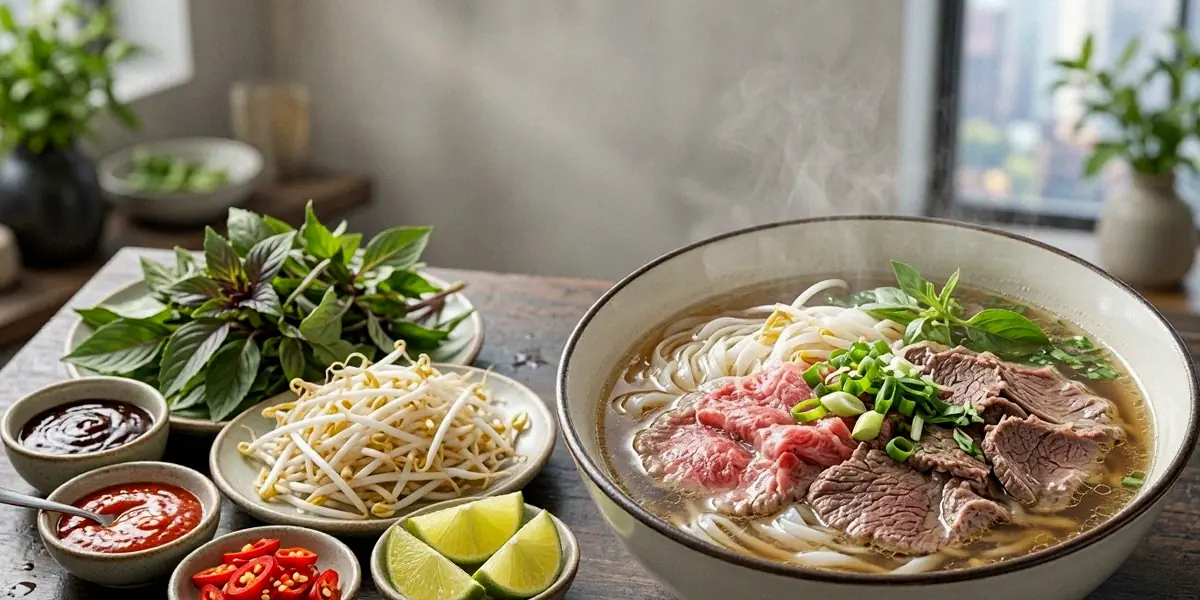
There’s a moment every pho lover knows well. The steaming bowl lands in front of you, fragrant with star anise and cinnamon, and right behind it comes the plate — a riot of colour and texture. Bright green Thai basil, pale bean sprouts, a wedge of lime, a few rings of red chilli. For Australian diners, that garnish plate isn’t a side note. It’s half the experience. Get it right and your bowl sings. Ignore it and you’re eating a very different, much flatter soup. So let’s break down exactly what’s on that plate, why it matters, and how to use it properly.
The Essential Garnish Plate: What You’ll Find in Australia
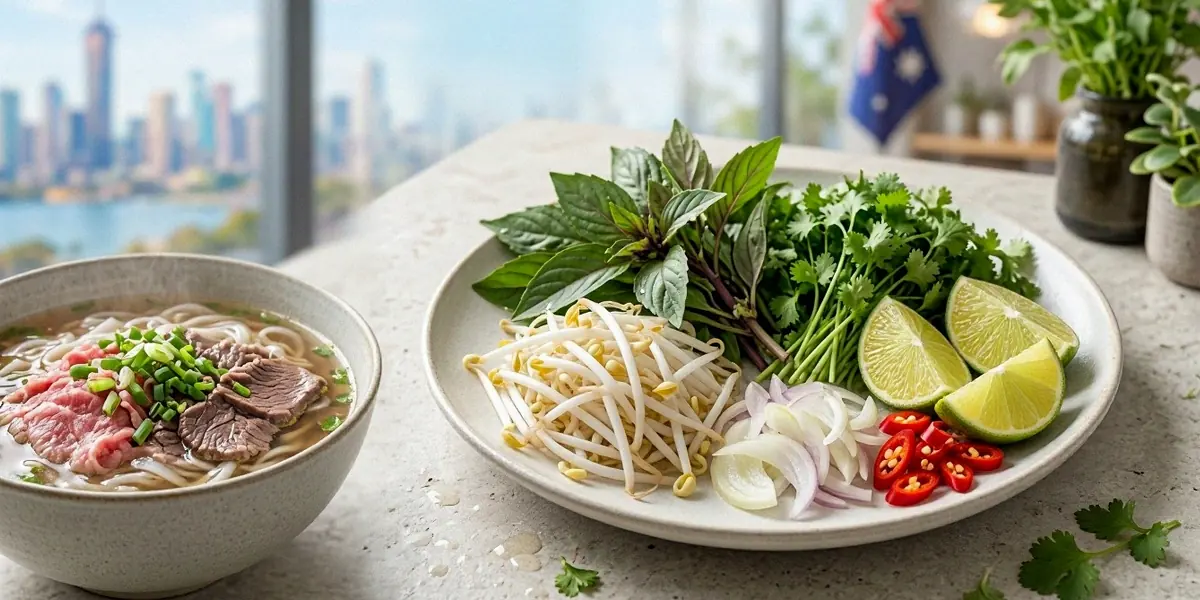
Walk into almost any Vietnamese restaurant in Melbourne or Sydney and you’ll be handed the same core lineup. It’s a fairly standard set, and most places bring it out automatically without you needing to ask. Here’s what typically shows up:
- Thai basil — sweet, anise-like, with a distinctive purple stem
- Bean sprouts — raw, crunchy, and cooling
- Lime wedges — usually one or two per person
- Sliced chilli — red or bird’s eye, depending on the kitchen
- Coriander — sometimes on the plate, sometimes already in the bowl
- Vietnamese mint (rau răm) — less common but worth knowing
The whole point of this plate is balance. Pho broth is rich and savoury, built on slow-simmered beef bones. The garnishes cut through that richness — acid from lime, heat from chilli, freshness from herbs, crunch from sprouts. Leave them out and the bowl feels heavy. Use them well and every spoonful stays lively right to the bottom.
Thai Basil vs. Holy Basil: What’s the Difference?
Thai basil (hung quế) is what you’ll almost always get with pho. It has a mild, sweet, licorice-forward flavour and those telltale purple stems. Holy basil (hung chó) is spicier, more peppery, and has a slight clove note. You’ll rarely see holy basil with pho — it’s more at home in Thai stir-fries. If a restaurant serves you something with a sharper, hotter bite, you’ve probably got holy basil on your hands. Both work, but Thai basil is the traditional partner for a bowl of pho.
Bean Sprouts: Raw or Blanched?
This one causes genuine debate. In Vietnam, bean sprouts are often served raw and piled into the bowl at the table. In many Australian restaurants, they arrive raw too — crisp and cold, which adds a clean snap against the hot broth. Some places blanch them briefly first, which softens the texture and removes a bit of the raw edge. Neither is wrong. If you like crunch, add them raw. If you prefer them wilted and tender, drop them in early and let the broth do the work.
Lime Wedges: The Acid Factor
Lime is the most underrated item on the plate. A good squeeze at the table lifts the entire bowl — it brightens the beefy depth of the broth and makes the herbs taste more alive. Don’t squeeze it in immediately, though. Taste the broth first, then add lime gradually. Too much and you’ll drown the aromatics. Most of us squeeze half a wedge, stir, taste, and adjust.
Beyond the Basics: Regional and Lesser-Known Garnishes
The standard plate is just the starting point. Once you move into northern-style pho or start exploring other Vietnamese noodle soups, a whole second tier of herbs appears. These are the ones that separate a decent bowl from a memorable one. You’ll find them at specialty Asian grocers — think Cabramatta in Sydney, which is legendary for its authentic Vietnamese ingredients, or the Richmond district in Melbourne, where Vietnamese restaurants and grocers sit side by side along Victoria Street.
Sawtooth Coriander: The Secret Weapon
Sawtooth coriander (ngò gai) is one of the most important herbs in Vietnamese cooking, and it’s a key herb in bun bo Hue. The leaves have serrated edges — hence the name — and a pungent, almost medicinal flavour that mellows in hot broth. It’s sharper than regular coriander and adds a savoury depth that plain coriander can’t match. If you see it on a garnish plate, use it.
Rice Paddy Herb: A Citrusy Twist
Rice paddy herb (ngò om) is a lesser-known herb with a clean, citrusy, cumin-like aroma. It’s traditionally used in sour soups (canh chua) but turns up alongside certain regional pho styles too. It’s delicate, so add it late and let the residual heat release its oils rather than cooking it down.
Perilla Leaves: The Minty Addition
Perilla (tía tô) looks a bit like a large mint leaf with a purple tinge. Its flavour sits somewhere between mint, basil, and shiso — slightly sweet, slightly savoury. It’s more common in northern Vietnamese dishes and pairs beautifully with beef. Tear it rather than chop it, and add it just before eating.
How to Use Garnishes Like a Pho Pro
There’s an art to this, and it’s simpler than it looks. The main thing to remember is timing — different garnishes go in at different stages, and dumping everything in at once muddles the bowl.
Timing Matters: When to Add What
- Bean sprouts first — add them early so they sit in the hot broth and soften slightly while keeping some crunch.
- Herbs next — basil, coriander, sawtooth coriander, and perilla go in just before you start eating.
- Chilli and lime last — add these at the table, tasting as you go, so you control the heat and acidity.
Tearing vs. Chopping: Maximising Flavour
Always tear herbs by hand rather than chopping them. Tearing bruises the leaves gently and releases more essential oils, which is where all the aroma lives. A chopped herb loses some of that punch and oxidises faster. It sounds fussy, but once you try it side by side, you’ll notice the difference.
Customising Your Bowl: Australian Style
Here in Australia, we’ve developed our own habits. We like to load up the herbs, go heavier on the chilli than traditionalists might, and squeeze lime with abandon. There’s no wrong way — the whole point of the garnish plate is that you build the bowl you want. Taste, adjust, taste again.
Garnishes for Bun Bo Hue: A Different Approach
Bun bo Hue is the spicy beef noodle soup from central Vietnam, and it comes with its own garnish tradition. The broth is built on lemongrass and chilli oil, so the herbs need to stand up to more heat and complexity. Australian Vietnamese restaurants often serve it with a similar-looking plate, but the herbs are distinctly different.
Banana Blossom: The Crunchy Addition
Banana blossom is a traditional garnish for bun bo Hue. It’s shredded finely and adds a mild, slightly bitter crunch that contrasts with the rich, spicy broth. You’ll find it fresh at Asian grocers, though it takes a bit of prep — soak the shreds in water with a little lemon to stop them browning.
Mint and Coriander: The Fresh Finish
Regular mint and coriander show up alongside bun bo Hue to cool the palate. They’re simpler than the northern herbs, but they do the job — cutting through the chilli oil and lemongrass.
Chilli and Shrimp Paste: The Heat Factor
Bun bo Hue usually comes with extra chilli and a small dish of shrimp paste (mắm ruốc) on the side. The shrimp paste is pungent and salty — add a little at a time, stir it through, and taste before adding more. It’s the signature flavour of the dish, and a little goes a long way.
Where to Find Fresh Garnishes in Australia
Sourcing good herbs makes a real difference, and Australia is well served if you know where to look.
Asian Grocers: The Best Bet
For the full range — sawtooth coriander, rice paddy herb, perilla, banana blossom — head to a dedicated Asian grocer. Cabramatta in Sydney is the gold standard for authentic Vietnamese ingredients. In Melbourne, Richmond is the go-to, and Springvale, Bankstown, and Inala in Brisbane are all excellent too. These stores stock herbs that mainstream supermarkets simply don’t carry.
Growing Your Own: A Guide
Many of these herbs grow well in Australian climates. Thai basil, Vietnamese mint, and perilla all thrive in warm, sunny spots and do fine in pots on a balcony. Sawtooth coriander and rice paddy herb are trickier — they like humidity — but they’re worth a try if you’re in Queensland or northern NSW. Fresh-cut herbs from your own garden beat anything from a plastic bag.
Supermarket Alternatives: What Works
If you can’t get to a specialty grocer, Coles and Woolworths stock basic garnishes like Thai basil and bean sprouts, and usually coriander and limes too. It’s not the full experience, but it covers the essentials for a solid home bowl of pho.
FAQ
Do I have to use all the garnishes?
No. The garnish plate is there for you to customise. Start with the herbs and a squeeze of lime, then add chilli and sprouts to taste. Build the bowl you actually enjoy.
Can I add garnishes to the broth while it’s still cooking?
We wouldn’t recommend it for the fresh herbs — cooking them down kills the aroma. Add them to your individual bowl instead, right before eating. Bean sprouts are the exception; they can go in early.
What’s the difference between pho garnishes and bun bo Hue garnishes?
Pho leans on Thai basil, bean sprouts, lime, and chilli. Bun bo Hue uses banana blossom, mint, coriander, and often shrimp paste on the side, plus sawtooth coriander as a key herb.
Where can I buy sawtooth coriander in Australia?
Specialty Asian grocers are your best bet — try Cabramatta in Sydney, Richmond in Melbourne, or Springvale. It’s rarely stocked in mainstream supermarkets.
Is it okay to squeeze all the lime in at once?
You can, but we’d suggest adding it gradually. Taste the broth first, then squeeze, stir, and taste again. That way you get the brightness without overpowering the aromatics.
Garnishes aren’t decoration — they’re the finishing move that turns a good bowl of pho into a great one. From the basics at your local in Richmond to the banana blossom and shrimp paste that define a proper bun bo Hue, each element earns its place. Next time that plate lands on your table, take a second before you dive in. Tear the herbs, squeeze the lime, taste as you go, and build the bowl that’s exactly right for you.