
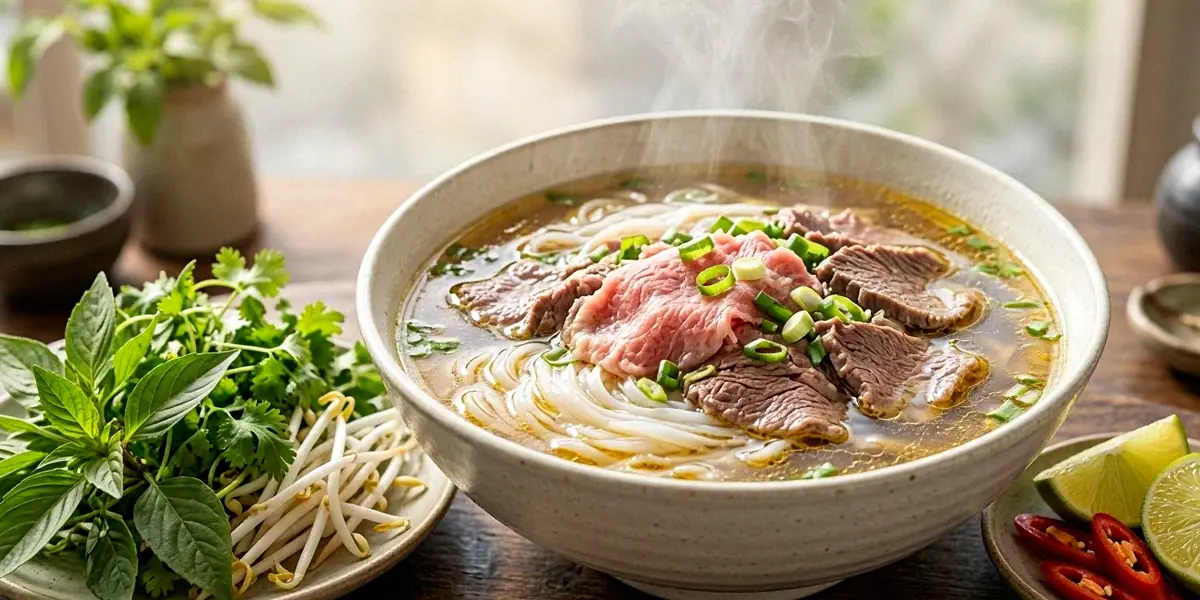
Pho 101: Broth, Noodles and Herbs
It’s a chilly Tuesday night in Melbourne and we’re tucked into a tiny restaurant in Richmond, elbows on the table, face hovering over a bowl of pho so hot the steam fogs up our glasses. The broth is dark and glossy, the noodles are tangled beneath a few blushing slices of rare beef, and the smell of star anise and charred ginger is doing something almost medicinal to our mood. We slurp, we sigh, we reach for the Thai basil. And then, somewhere between the first and fifth spoonful, the same question always creeps in: what actually makes a truly great bowl of pho? Is it the bones? The charring? The fish sauce? The answer, as with most good things in Vietnamese cooking, is a bit of all of it.
The Soul of Pho: Broth
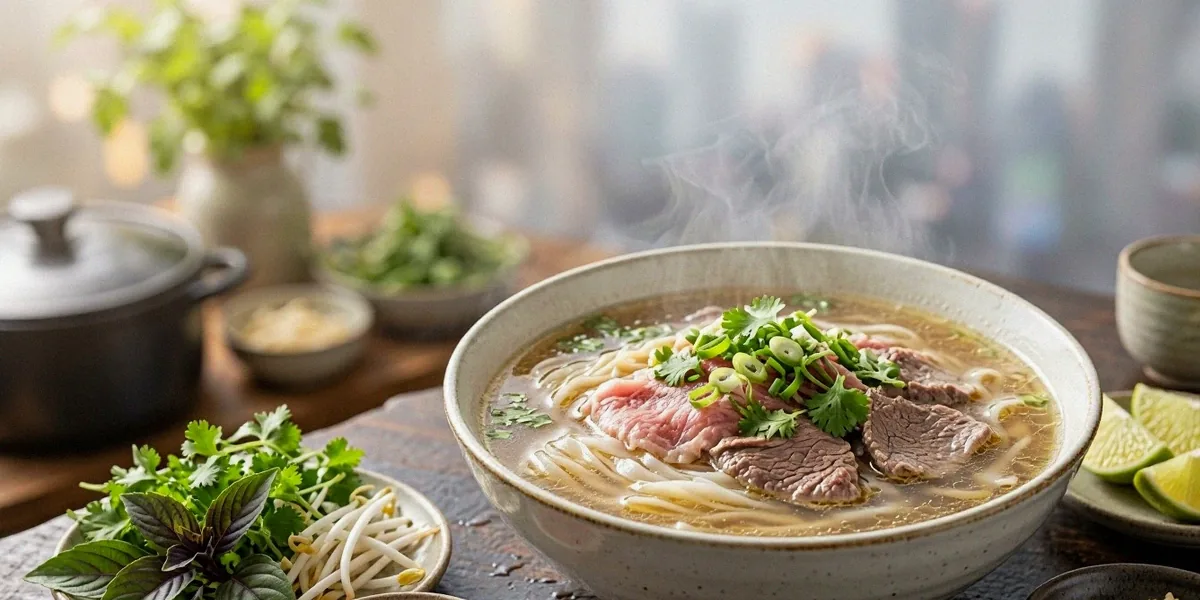
If pho has a soul, it lives in the broth. Everything else — the noodles, the herbs, the beef — is there to support it. A proper pho broth starts with beef bones: leg bones for body, knuckles for gelatin, and oxtail if you’re feeling generous. Those bones get simmered gently for anywhere between six and twelve hours with charred onion and ginger, star anise, cinnamon, cloves, and a generous glug of fish sauce. The result should be deep, aromatic, and just slightly sweet, with a clean finish rather than a heavy, greasy one. In Australia, many Vietnamese restaurants in Melbourne’s Richmond and Sydney’s Cabramatta pride themselves on their broth, and it’s no accident that these are the suburbs where you’ll find the longest queues on a Sunday morning.
Key Ingredients for a Deep, Clear Broth
You don’t need a hundred ingredients to make great pho — you need the right ones. Our shortlist looks like this:
- Beef bones: leg bones, knuckles, and oxtail for a mix of body and collagen
- Charred onion and ginger: the aromatic backbone of the broth
- Whole spices: star anise, cinnamon, cloves, and optionally black cardamom
- Fish sauce: for salt and umami — we’ll come back to this
- Rock sugar: a small piece to round out the savoury notes
- Salt: to taste, added gradually rather than all at once
The Art of Charring Aromatics
Charring onion and ginger is one of those steps that separates a decent pho from a memorable one. You want the outer layers blackened and blistered — either under a hot grill, directly on a gas flame, or in a dry pan — until the kitchen smells smoky and sweet. That charred flavour is what gives pho its signature depth. Skip this step and the broth will taste flat, no matter how long you simmer it.
Simmering Times and Skimming for Clarity
Long and slow is the rule. Bring the bones to a boil, then immediately drop to a gentle simmer and skim the surface regularly for the first hour. Those grey impurities are what turn a broth cloudy, and a cloudy pho is a sad pho. After the initial skimming, you can relax a bit, but keep an eye on it. Six hours is the minimum we’d recommend; eight to twelve is where the magic happens. And please, don’t boil it hard — a rolling boil will emulsify the fat and ruin the clarity you’ve worked for.
Noodles: The Perfect Slurp
Noodles are the vehicle for everything else, and they deserve respect. Pho uses flat rice noodles, known as banh pho, and they should be soft but chewy — never mushy, never chalky. In Australia, brands like Longkou and Erawan are widely available in Asian grocers, and both do a solid job. If you’re in Melbourne, a trip to any of the Vietnamese grocers in Richmond will sort you out in minutes.
Fresh vs Dried Noodles: What We Recommend
Fresh noodles have a lovely silky texture and cook in seconds, but they’re perishable and harder to find outside of specialist stores. Dried noodles are more convenient, keep for months, and — if cooked properly — come very close to the real thing. For weeknight pho, we usually reach for dried. For a weekend project, fresh is worth the effort.
How to Cook and Rinse Noodles Properly
Here’s the method we stick to:
- Bring a large pot of water to a rolling boil.
- Drop in the noodles and stir gently to separate them.
- Cook for the time stated on the packet — usually 3 to 5 minutes for dried.
- Drain immediately and rinse under cold water to stop the cooking.
- Shake off excess water and portion into bowls just before serving.
That cold rinse matters. It stops the noodles from turning into a sticky lump while you’re assembling the bowls.
Herbs and Garnishes: The Fresh Finish
A bowl of pho without herbs is like a summer day without sunshine. The herb plate is non-negotiable: Thai basil, coriander, mint, bean sprouts, lime wedges, sliced chilli, and — if you can find it — sawtooth coriander, which has a slightly citrusy, almost medicinal edge that we love. In Australia, these herbs are easily found at local markets like Queen Victoria Market in Melbourne, where the herb stalls are stacked high and the prices are kind.
The Must-Have Herbs for Authentic Pho
- Thai basil: anise-like and essential
- Coriander: fresh stems and leaves, roughly torn
- Mint: cooling and bright
- Bean sprouts: for crunch
- Lime wedges: for acidity
- Sliced red chilli: for heat
- Sawtooth coriander: optional but excellent
Regional Variations: Southern vs Northern Style Garnishes
Northern pho, from Hanoi, tends to be simpler — fewer herbs, less sweetness, and a focus on the purity of the broth. Southern pho, from Saigon, piles on the garnishes, adds hoisin and sriracha at the table, and leans sweeter in the broth. Most pho you’ll eat in Australia is southern-style, which is why the herb plate is usually so generous. We’re not complaining.
Meat and Toppings: Beyond Rare Beef
Rare beef is the classic, but pho is a broad church. You’ll find brisket, flank, eye round, meatballs, tendon, tripe, and sometimes chicken. In Australia, many pho spots offer a mix, and we love the rare beef at Pho Hung in Sydney’s Cabramatta — thin, tender, and just cooked through by the heat of the broth as it hits the bowl.
Classic Beef Cuts for Pho
If you’re building your own bowl at home, these are the cuts worth seeking out:
- Eye round: thinly sliced, served rare
- Brisket: slow-cooked and sliced
- Flank: lean and slightly chewy
- Beef balls: bouncy and savoury
- Tendon and tripe: for the adventurous
Chicken Pho and Other Variations
Chicken pho (pho ga) is lighter and gentler than its beef counterpart, made with a clear chicken broth and poached or shredded chicken. It’s a great entry point if you’re new to pho, and it’s also a wonderful way to use up a Sunday roast chicken carcass. Other variations include pho with rare steak and brisket combined, and pho with meatballs for a more substantial bowl.
Bun Bo Hue: A Spicy Cousin
If pho is the polite, well-mannered cousin at the family table, bun bo Hue is the one who arrives late, wearing leather, and orders a whisky. It’s a spicy, lemongrass-infused noodle soup from central Vietnam, with a broth that’s richer, punchier, and more complex than pho. It’s gaining serious popularity in Australia, with dedicated spots like Bun Bo Hue in Melbourne’s Footscray doing a roaring trade.
What Sets Bun Bo Hue Apart
Three things: lemongrass, chilli, and shrimp paste. The broth is built on beef and pork bones, simmered with lemongrass, then finished with chilli oil and a touch of shrimp paste for depth. The noodles are thicker and rounder than pho noodles, and the toppings usually include beef shank, pork hock, and sometimes congealed pork blood. It’s a bolder, spicier, more intense bowl — and once you’ve had a good one, you’ll crave it.
Where to Find It in Australia
Melbourne’s Footscray is the spiritual home of bun bo Hue in Australia, and the restaurants there take it seriously. Sydney has strong options too, particularly in Cabramatta and Bankstown. If you’re new to bun bo Hue, ask for the chilli on the side so you can control the heat.
Our Tips for the Perfect Bowl at Home
Making pho at home is a project, but it’s a rewarding one. Our advice: use good quality fish sauce — Red Boat is a premium brand favoured by our team, and it makes a noticeable difference — don’t skip the charring step, and taste as you go. Seasoning is a moving target; what tastes perfect at hour four might need a splash more fish sauce at hour eight. And if you can, visit Asian grocers in Australia for authentic ingredients — the difference between a supermarket star anise and a fresh one from a proper grocer is real.
Essential Equipment for Home Cooking
- A large stockpot (at least 8 litres)
- A fine-mesh skimmer for removing impurities
- A strainer or muslin cloth for straining the broth
- A gas flame or grill for charring aromatics
- A sharp knife for slicing beef thinly
Balancing Flavours: Salt, Sweet, Sour, Spice
Vietnamese cooking is all about balance. Your pho broth should hit all four notes: salty from fish sauce, sweet from rock sugar and the natural sweetness of the bones, sour from a squeeze of lime at the table, and spicy from chilli. If it tastes flat, it’s usually missing salt or acid. If it tastes heavy, it needs more lime. Taste, adjust, taste again.
FAQ
What’s the difference between pho and bun bo Hue?
Pho is a beef-based noodle soup with a clear, aromatic broth flavoured with star anise and cinnamon. Bun bo Hue is a spicy, lemongrass-forward soup from central Vietnam with a richer, more complex broth and thicker round noodles. Both are delicious, but they’re very different bowls.
Can I make pho broth in a slow cooker?
Yes, and it works well. Brown the bones and char the aromatics first, then transfer everything to the slow cooker with water and spices. Cook on low for 8 to 10 hours. The result won’t be quite as clear as a stovetop version, but it’s a great set-and-forget option.
Where can I find fresh pho noodles in Australia?
Asian grocers in suburbs like Richmond in Melbourne and Cabramatta in Sydney are your best bet. Look for fresh banh pho in the refrigerated section. If you can’t find fresh, dried noodles from brands like Longkou or Erawan are widely available and work beautifully.
Is pho healthy?
Pho can be a balanced meal — it’s rich in protein from the beef, contains plenty of fresh herbs, and the broth is relatively low in fat if you skim it well. Watch the sodium levels if you’re sensitive to salt, and go easy on the hoisin and sriracha if you’re watching sugar.
What fish sauce do you recommend for pho?
We’re big fans of Red Boat, a premium Vietnamese fish sauce made from just anchovies and salt. It’s more expensive than supermarket brands, but the flavour is cleaner and more complex. For everyday cooking, Three Crabs or Squid brand are solid alternatives.
At the end of the day, the best bowl of pho is the one you make with care and share with friends. Whether you’re ladling out a twelve-hour beef broth in your own kitchen or queuing for a bowl in Richmond or Cabramatta, the ritual is the same: hot broth, slippery noodles, a fistful of herbs, and good company. Start with the broth, respect the noodles, don’t skimp on the garnishes, and experiment with bun bo Hue when you’re ready for something with a bit more fire. Your kitchen will smell incredible, and your friends will thank you.