
How to Order Pho Like a Regular: An Aussie Guide
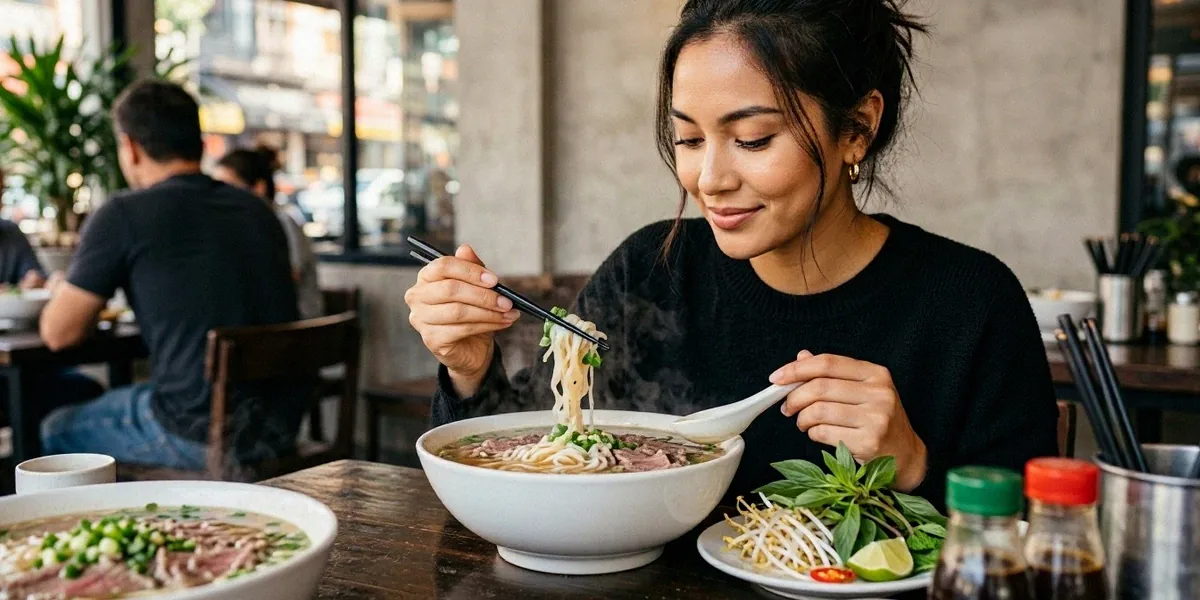
We still remember the first time we walked into a bustling pho joint on Victoria Street in Richmond, Melbourne. The steam fogged up the windows, a dozen conversations bounced off the walls, and someone behind the counter barked an order we didn’t understand. We stood there clutching a menu, panicking quietly, wondering why everyone else seemed to know exactly what they were doing. If that sounds familiar, you’re in the right place. This guide is everything we wish someone had told us back then — how to read the menu, customise your bowl, use the herbs and sauces properly, and order with the quiet confidence of someone who’s been coming here for years.
Understanding the Pho Menu: What You’re Actually Ordering
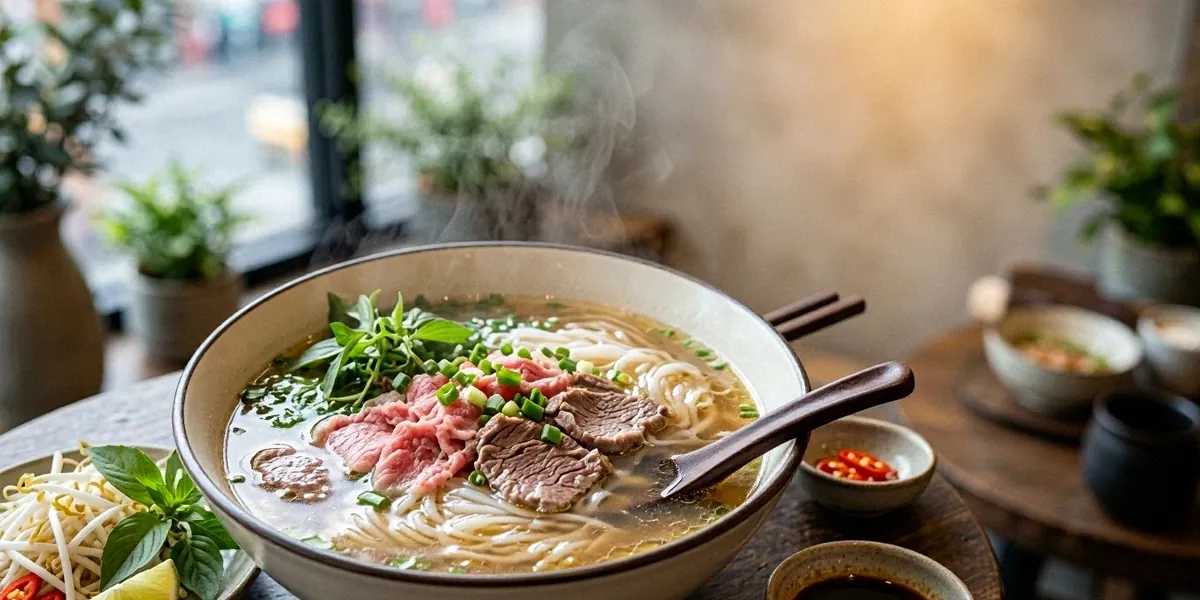
Pho is, at its heart, a simple dish: rice noodles in a slow-simmered broth, topped with your choice of meat and finished with herbs. But the menu at your local Vietnamese restaurant can look like a codebook. Words like tai, chin, nam, and gan aren’t there to intimidate you — they’re just telling you which cut of beef is in the bowl. Most Australian pho spots keep things straightforward, offering either a beef broth (pho bo) or a chicken broth (pho ga), with variations built on top of that base. The broth itself is the real work: beef bones simmered for hours with star anise, cinnamon, ginger, and charred onion until it’s deep, clear, and fragrant.
Beef vs. Chicken Pho: The Core Difference
Beef pho is the default in most Australian restaurants, and it’s where the classic flavour profile lives — rich, savoury, and slightly sweet from the bones. Chicken pho (pho ga) is lighter and cleaner, often the go-to when you want something gentler on the stomach or you’re recovering from a big weekend. Neither is “better”; it depends on your mood. If it’s your first time, we’d suggest starting with beef and working your way through the cuts.
Decoding Meat Cuts: Rare Steak, Brisket, Flank, and Tendon
Here’s a quick translation guide to the terms you’ll see most often:
- Tai (rare steak): Thin slices of raw beef dropped into the hot broth at the last second. They cook gently in front of you and stay tender.
- Chin (well-done brisket): Slow-cooked, soft, and rich. A safe bet if you don’t like the idea of rare meat.
- Nam (flank): Leaner and slightly chewier, with a clean beef flavour.
- Gan (tendon): Gelatinous and silky once cooked. An acquired taste, but a favourite among regulars.
- Sach (tripe): Crunchy and springy. Often included in combination bowls.
If you can’t decide, order pho dac biet — the special combination bowl. Many Australian pho restaurants offer it as a house specialty, and it usually includes a bit of everything.
Customising Your Bowl: Broth, Noodles, and Extras
One of the best things about eating pho in Australia is how willing most kitchens are to tweak your bowl. You’re not being difficult by asking for less oil or extra noodles — it’s normal, and staff expect it. Just be polite and specific. Places like Pho Hung in Melbourne are known for their rich beef broth and fresh noodles, and they’ll happily adjust things if you ask.
Broth Adjustments: Less Salt, More Herbs
If you’re watching your sodium or just prefer a cleaner taste, ask for “less salt” or “less MSG” — many places will accommodate. You can also request extra herbs on the side, more spring onion, or no onion at all if raw onion isn’t your thing. For a lighter bowl, ask for the oil to be skimmed off the top of the broth. None of these requests will raise an eyebrow.
Noodle Preferences: Fresh vs. Dried
Fresh rice noodles have a soft, slippery texture and soak up broth beautifully, while dried noodles are slightly firmer and hold their shape longer. Many Australian pho spots — Pho Hung included — let you choose between the two, so don’t be shy about asking which they use and whether you can swap. If you prefer a chewier bite, go dried. If you want that silky, classic pho experience, go fresh.
The Herbs and Sauces Ritual: What Goes In and When
The plate that lands beside your bowl is not decoration — it’s part of the meal. You’ll typically get Thai basil, bean sprouts, coriander, lime wedges, and sometimes sliced chilli. Alongside it, a pair of sauces: hoisin (sweet, thick, dark) and sriracha (hot, garlicky, red). In Australia, many Vietnamese restaurants also put out chilli oil or pickled garlic, which is a lovely local touch you won’t always find overseas.
Herbs: To Add or Not to Add?
There’s no rule saying you must dump the entire plate into your bowl. We usually tear the Thai basil leaves, add a handful of bean sprouts, and squeeze in a wedge of lime. Coriander is divisive — if you love it, go for it; if you don’t, leave it on the plate. The herbs are there to brighten the broth, not drown it.
Sauces: Hoisin, Sriracha, and Beyond
Here’s the thing most first-timers get wrong: don’t pour sauces straight into the broth. Instead, squeeze a little hoisin and sriracha into a small side dish and dip your meat into it as you eat. That way you control the flavour of each bite without wrecking the broth the kitchen spent hours making. If you like heat, add a spoonful of chilli oil directly to the bowl — that’s the one sauce that works better mixed in.
Ordering Like a Pro: Timing, Sides, and Drinks
Once you’re comfortable with the basics, the next level is working the rhythm of the meal: when to order sides, what to drink, and how to sound like someone who’s done this a hundred times. In Sydney’s Cabramatta, a hub for authentic Vietnamese pho and bun bo Hue, regulars often order pho dac biet with extra broth on the side — a move worth copying, especially if you like your noodles less soupy.
Sides That Complement Pho
Order sides at the same time as your pho so they arrive together or just before. Good options include:
- Fresh rice paper rolls (goi cuon) — light, cool, and a nice contrast to hot broth.
- Fried spring rolls (cha gio) — crunchy and best shared.
- Vietnamese salad (goi) — tangy and herb-heavy, great if you want something fresh alongside.
Don’t over-order. One side between two people is usually plenty, since the pho itself is a full meal.
Drinks to Order with Your Bowl
Vietnamese iced coffee (ca phe sua da) is a popular drink to pair with pho in Australia — strong, sweet, and served over ice, it cuts through the richness of the broth beautifully. Fresh coconut juice is another excellent choice, especially on a hot day. If you want something lighter, jasmine tea or a simple soda with lime works fine. Beer drinkers often go for a light lager, which pairs surprisingly well with beef pho.
Regional Variations: Bun Bo Hue and Other Noodle Soups
Pho isn’t the only noodle soup worth your attention. Once you’ve mastered the basics, branch out — especially into bun bo Hue, the spicy, lemongrass-forward soup from central Vietnam. Many Australian Vietnamese restaurants, like Bun Bo Hue in Brisbane, specialise in it, and it’s a completely different experience from pho.
Bun Bo Hue: What to Expect
Bun bo Hue is a spicy noodle soup from central Vietnam, often served with pork and beef — typically a knuckle of pork, slices of beef shank, and sometimes congealed pork blood. The broth is built on lemongrass and chilli oil, giving it a reddish colour and a bold, aromatic kick that pho doesn’t have. The noodles are round and thicker than pho’s flat rice noodles. To order it like a regular, ask for extra herbs on the side, squeeze in plenty of lime, and don’t be afraid to add a spoonful of the chilli paste that comes with it. If you can’t handle heat, ask for it mild — most kitchens will adjust.
Other Vietnamese Noodle Soups Worth Trying
Beyond pho and bun bo Hue, keep an eye out for hu tieu (a clear pork-and-seafood noodle soup with Chinese influence), mi quang (turmeric noodles from central Vietnam, served with peanuts and rice crackers), and banh canh (thick tapioca noodles in a hearty broth). Each one has its own personality, and most Australian Vietnamese restaurants that do pho well also do these well.
Ordering pho like a regular isn’t about knowing secret passwords or memorising every Vietnamese term. It’s about confidence and personal taste — asking for what you want, tasting as you go, and not being afraid to experiment. Start with a pho dac biet at your local spot, try a bowl of bun bo Hue next time, and see where your taste takes you. The more you order, the more it feels like home.
FAQ
What does ‘pho dac biet’ mean?
It means “special combination pho” — a bowl that typically includes several cuts of beef such as rare steak, brisket, flank, tendon, and tripe. It’s the best way to try a bit of everything in one go, and many Australian pho restaurants offer it as a house specialty.
Should I put hoisin and sriracha directly into my pho broth?
We recommend against it. Pour a little of each into a small side dish and dip your meat as you eat. This keeps the broth’s carefully built flavour intact while still letting you enjoy the sauces. Chilli oil, on the other hand, works well stirred straight into the bowl.
Is bun bo Hue spicier than pho?
Yes, noticeably. Bun bo Hue is a spicy noodle soup from central Vietnam, made with lemongrass and chilli oil, and often served with pork and beef. If you’re sensitive to heat, ask for it mild — most kitchens will tone it down for you.
What’s the best drink to have with pho?
Vietnamese iced coffee (ca phe sua da) is a popular pairing in Australia thanks to its strong, sweet flavour. Fresh coconut juice, jasmine tea, or a light lager also work well depending on your mood and the weather.
Can I ask for extra noodles or less oil?
Absolutely. Customising your bowl is normal at most Australian pho restaurants. Ask for extra noodles, less oil, no onion, or extra herbs — staff are used to these requests and will usually accommodate them without fuss.