
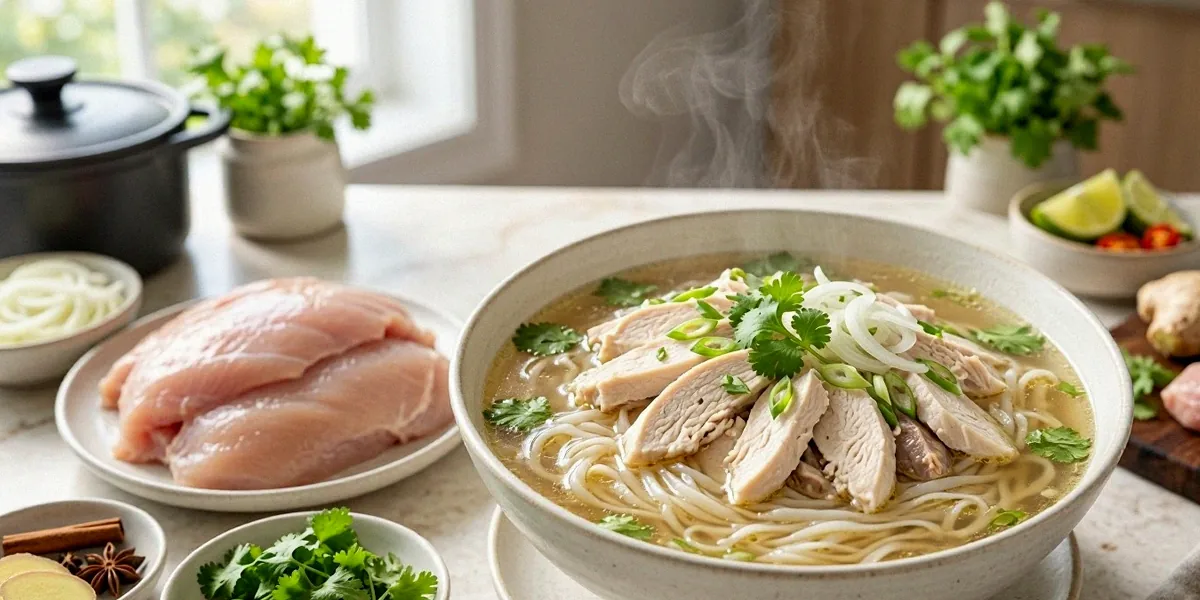
Chicken Pho Step by Step: A Foolproof Recipe for Australian Kitchens
It was a cold, drizzly Tuesday in Melbourne, the kind of evening where the tram windows fog up and all you want is something warm and soothing. We found ourselves craving a steaming bowl of chicken pho — the clear, golden broth, the slippery rice noodles, the fragrant herbs — but the nearest good Vietnamese spot was a 40-minute trek away. So we decided it was finally time to master it at home. What we discovered is that chicken pho is one of the most forgiving, rewarding dishes you can make in an Australian kitchen. Here’s our foolproof, step-by-step guide.
Why Chicken Pho Deserves a Spot in Your Rotation
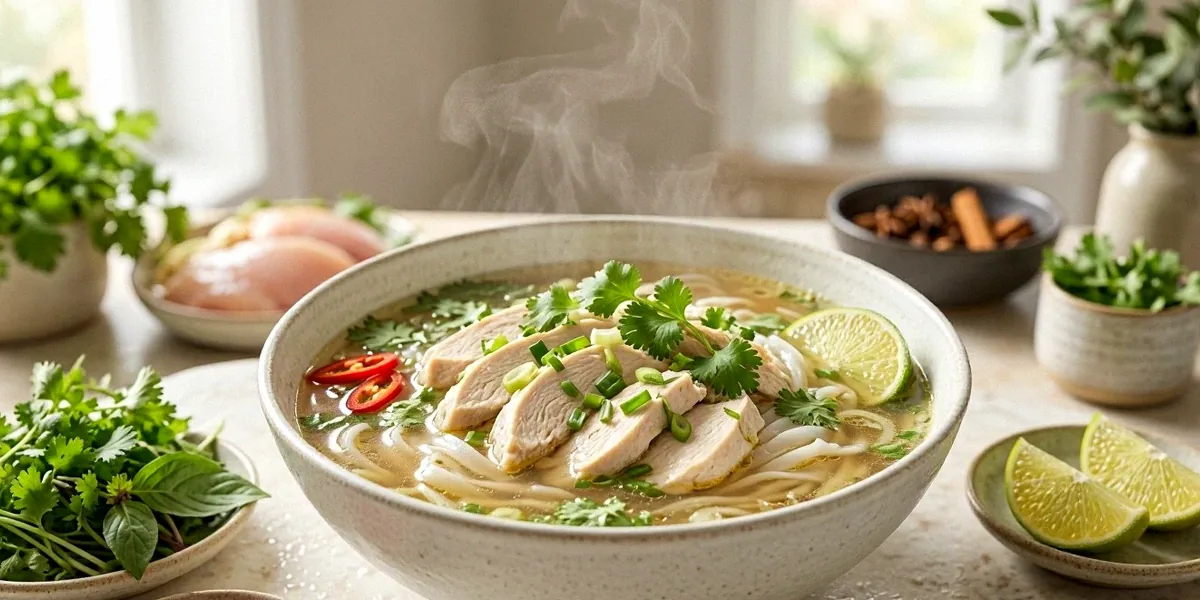
Beef pho gets most of the glory, but chicken pho (phở gà) is the lighter, cleaner cousin that deserves equal billing. The broth is gentler, the cooking time is shorter, and the result is a bowl that feels nourishing rather than heavy. It’s the version we reach for on weeknights, when we want comfort without the food coma.
Chicken vs Beef Pho: What’s the Difference?
The core difference is the protein and the broth base. Beef pho relies on beef bones, brisket, and sometimes oxtail, simmered for many hours to build a deep, rich flavour. Chicken pho uses a whole chicken or chicken carcass, which produces a clearer, more delicate broth in roughly half the time. Both share the same aromatic backbone — charred ginger and onion, star anise, cinnamon, cloves, and fish sauce — but chicken pho leans brighter and more herbal. If you’re new to making pho at home, start with chicken. It’s far more forgiving.
The Australian Love Affair with Vietnamese Noodle Soup
Australia has one of the most vibrant Vietnamese food cultures outside Vietnam, thanks to waves of migration from the 1970s onward. Cabramatta in Sydney is known for its authentic Vietnamese eateries, where the pho is often served with a generosity that borders on overwhelming. Richmond in Melbourne is a hub for Vietnamese pho restaurants, with Victoria Street lined end-to-end with bowls of steaming broth. We’ve eaten our fair share in both suburbs, and the lesson is always the same: great pho comes down to a clean, well-seasoned broth and fresh garnishes.
Essential Ingredients for Authentic Chicken Pho
You don’t need a specialty import store to make excellent chicken pho. Most of what you need is at your local Woolworths, Coles, or an Asian grocer. Here’s what we keep on hand.
- Free-range chicken — a whole bird around 1.5–1.8kg, or a mix of drumsticks, thighs, and a carcass for depth
- Fresh ginger — a large knob, halved lengthways
- Brown onions — two, halved
- Whole spices — star anise, cinnamon stick, cloves, coriander seeds, black peppercorns
- Fish sauce — Red Boat is a premium brand often recommended for pho, though Squid brand is a reliable, affordable workhorse
- Rock sugar — the yellow slabs, not white sugar
- Rice noodles — flat, dried banh pho style
- Garnishes — Thai basil, coriander, bean sprouts, lime, fresh chilli, spring onion
The Aromatics: Ginger, Onion, and Spices
The soul of any pho is its aromatics. Charring ginger and onion over an open flame or under a hot grill transforms them from sharp and raw into sweet and smoky. The spices — star anise, cinnamon, cloves, coriander seed — should be toasted in a dry pan until fragrant, which takes only a minute or two. Skip this step and your broth will taste flat.
Fish Sauce and Seasonings: Brands We Trust
Fish sauce is the backbone of the seasoning. Red Boat 40°N is the premium pick, prized for its pure, unadulterated anchovy flavour. Squid brand is what most Vietnamese home cooks in Australia keep in the pantry, and it’s excellent value. Add it gradually — you can always add more, but you can’t take it out. Rock sugar rounds out the saltiness, and a pinch of sea salt at the end brings everything into focus.
Noodles and Garnishes: What to Buy in Australia
Sun Rice and Erawan are common rice noodle brands in Australian supermarkets, and both make a reliable flat rice noodle for pho. Look for the widest cut you can find — around 3–5mm. For garnishes, hit up a local Asian grocer or weekend market for the freshest Thai basil and bean sprouts. Woolworths and Coles usually stock coriander, lime, and chilli year-round.
Step-by-Step: Making the Broth
The broth is where the magic happens. Take your time here and everything else falls into place.
Charring Aromatics for Depth
Halve your onions and ginger, then place them cut-side down on a dry frying pan over high heat, or directly under a hot grill. Let them blacken in spots — this takes 5–8 minutes. You want char, not ash. The burnt edges add a smoky sweetness that defines good pho.
Simmering and Skimming: Patience Pays Off
Place your chicken, charred aromatics, and toasted spices in a large stockpot. Cover with cold water — about 4 litres. Bring to a gentle simmer, then immediately reduce the heat. Skim the grey foam that rises to the surface every 15 minutes for the first hour. This is what gives you a clear broth. Simmer for 90 minutes to 2 hours total. Never let it boil hard.
Seasoning the Broth: Fish Sauce, Rock Sugar, and Salt
Once the chicken is cooked through and tender, remove it and set it aside. Strain the broth through a fine sieve or muslin cloth. Return it to the pot and season with 3–4 tablespoons of fish sauce, a 2cm chunk of rock sugar, and salt to taste. Taste and adjust — it should be savoury, slightly sweet, and deeply aromatic.
Preparing Noodles, Chicken, and Garnishes
With the broth done, assembly is quick. Here’s how we handle the components.
Cooking Rice Noodles Without Mushiness
Soak your dried rice noodles in warm water for 20–30 minutes until pliable. Then blanch them in boiling water for just 30–60 seconds — they cook fast. Drain immediately and rinse under cold water to stop the cooking. Never boil them for minutes on end; that’s how you get mush.
Shredding and Seasoning the Chicken
Once the poached chicken is cool enough to handle, shred it with your fingers or two forks. Toss it with a splash of fish sauce, a pinch of salt, and a squeeze of lime. This simple seasoning lifts the chicken from bland to brilliant.
The Garnish Plate: Fresh Herbs and Crunch
Arrange a plate with Thai basil, coriander, bean sprouts, lime wedges, sliced red chilli, and spring onion. This is the interactive part of pho — everyone dresses their own bowl at the table.
Assembling and Serving Your Chicken Pho
Now for the fun part. Get your bowls warm, your broth at a rolling simmer, and your garnishes ready.
Building the Perfect Bowl
Place a generous handful of noodles in each bowl. Top with shredded chicken. Ladle over the hot broth — it should almost cover the noodles. Then add your herbs, bean sprouts, a squeeze of lime, and chilli to taste.
Sides and Sauces: What to Put on the Table
Set out extra fish sauce, hoisin sauce, and sriracha for dipping and adjusting. A Vietnamese iced coffee (cà phê sữa đá) is the classic pairing — strong, sweet, and made with condensed milk. It’s the perfect counterpoint to a hot bowl of pho.
Tips, Tweaks, and Troubleshooting
Even the best cooks hit snags. Here’s how we handle the common ones.
Rescuing a Bland Broth
If your broth tastes flat, it usually needs one of three things: more fish sauce, more salt, or more time. Add fish sauce a teaspoon at a time, then salt, then simmer uncovered for another 20 minutes to concentrate the flavour. A piece of rock sugar can also wake up a broth that tastes thin.
Storage and Reheating
Store broth and noodles separately in the fridge for up to 4 days. Reheat the broth on the stovetop until simmering. Never microwave noodles in broth — they’ll turn to paste. Cooked chicken keeps for 3 days.
Shortcuts: Pressure Cooker and Store-Bought Stock
A pressure cooker can cut broth time from 2 hours to about 30 minutes at high pressure. If you’re really short on time, start with a good quality store-bought chicken stock and doctor it with charred aromatics, toasted spices, and fish sauce. It won’t be identical, but it’s a solid weeknight shortcut. For bones, Lenards is an Australian butcher chain where you can source chicken bones cheaply — just ask at the counter.
Frequently Asked Questions
Can I make chicken pho with store-bought rotisserie chicken?
Yes, in a pinch. Use the bones and skin to make a quick broth, then shred the meat for topping. The broth won’t be as rich, but it works for a fast weeknight version.
How do I keep my pho broth clear?
Never let it boil hard, and skim the surface every 15 minutes during the first hour. Straining through muslin at the end also helps remove fine particles.
Is chicken pho gluten-free?
Generally yes, as long as your fish sauce and noodles are gluten-free. Check labels — some fish sauces contain wheat. Rice noodles are naturally gluten-free.
What’s the best fish sauce for pho?
Red Boat is a premium brand often recommended for pho, thanks to its pure flavour. Squid brand is a more affordable everyday option that many Australian cooks swear by.
Can I freeze chicken pho broth?
Absolutely. Freeze cooled broth in airtight containers for up to 3 months. Reheat gently on the stovetop and season again to taste, as flavours can dull slightly in the freezer.
Making chicken pho at home is more than just dinner — it’s a ritual that connects us to Vietnamese culinary traditions while letting us play with local Australian ingredients. From the charred aromatics to the final squeeze of lime, every step is a small act of care. Once you’ve made it a few times, you’ll wonder why you ever waited in line for a table.