
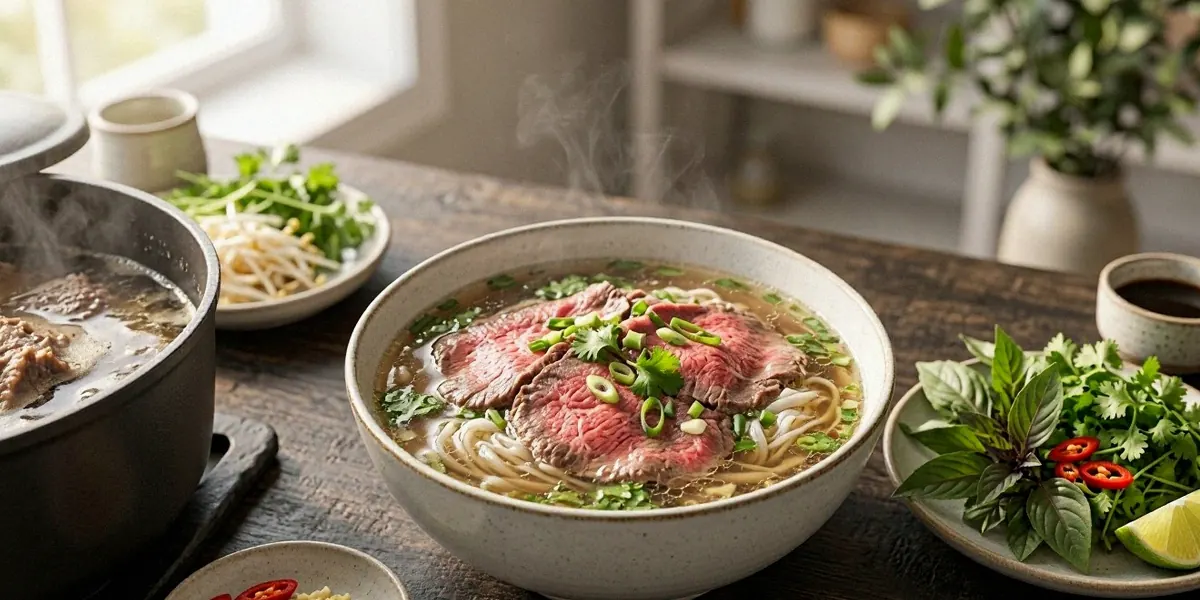
Beef Pho at Home: A Weekend Recipe
There’s nothing quite like the smell of charred ginger and star anise drifting through a Melbourne kitchen on a chilly Saturday morning. It signals one thing in our house: pho day. We believe pho is the ultimate weekend project — not because it’s difficult, but because it rewards patience. A pot of bones, a handful of warm spices, and a few hours of gentle simmering transform simple ingredients into one of the most soul-warming bowls of Vietnamese food you’ll ever eat. If you’ve ever queued at a packed pho spot on Victoria Street and wondered whether you could pull it off at home, this guide is for you.
Why We Love Making Pho at Home
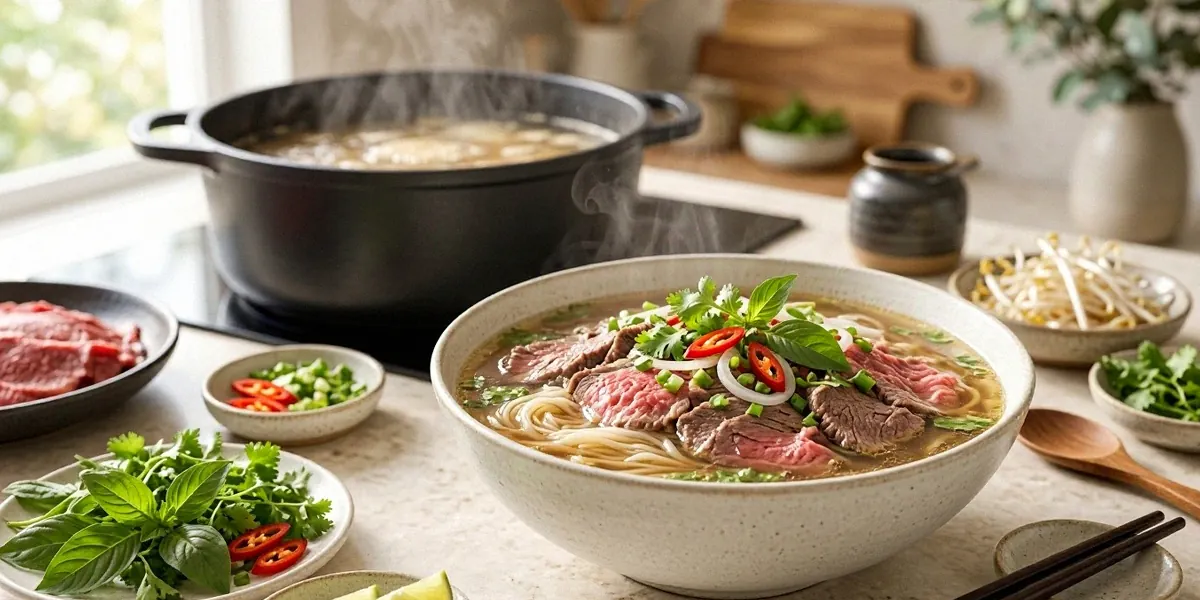
Melbourne and Sydney both have outstanding pho restaurants, and we’d never suggest giving them up. But there’s a particular satisfaction in building a broth from scratch — tasting it at hour three, adjusting it at hour five, and finally ladling it over noodles you prepared yourself. Homemade pho gives you control that no restaurant can offer. Want it beefier? Add more oxtail. Want it lighter? Skim more fat. Prefer it less salty? Hold back the fish sauce until the end.
The Magic of a Slow-Simmered Broth
A great pho broth can’t be rushed. The magic happens when beef bones, charred aromatics, and toasted spices spend six to eight hours together over low heat. Collagen from leg bones and oxtail melts into gelatin, giving the broth body and a glossy mouthfeel. Star anise, cinnamon, and cloves add warmth without overwhelming the beef. This is slow cooking at its most rewarding, and the result is a broth with layers of flavour that a stock cube will never replicate.
Customising Your Bowl to Aussie Tastes
One of the joys of cooking at home is tailoring the bowl to your table. Some of us like it heavy on the fish sauce, others prefer a sweeter balance with extra rock sugar. If you’re cooking for kids, you can dial back the spice and let everyone add hoisin and sriracha at the table. Australian palates tend to favour a slightly cleaner, less salty broth than some traditional versions — so taste as you go and trust your own tongue.
Essential Ingredients for Our Weekend Beef Pho
Good pho starts at the shop, not the stove. Here’s what we keep on our list:
- Beef bones — leg bones and oxtail for depth and gelatin
- Beef brisket — for slicing into the bowl
- Onion and ginger — charred until blackened at the edges
- Whole spices — star anise, cinnamon, cloves
- Fish sauce — we reach for Squid brand or Red Boat
- Rock sugar — for a rounded, gentle sweetness
- Rice noodles — flat, dried, and soaked or blanched to order
For the best selection, head to an Asian grocer. Melbourne’s Victoria Street is known as Little Saigon and is a great place to source pho ingredients, from fresh rice noodles to whole spices sold by the bag. In Sydney, Cabramatta offers the same treasure trove. Buying spices whole and toasting them yourself makes a noticeable difference.
Choosing the Right Beef Bones and Cuts
We look for a mix of marrow-rich leg bones and meaty oxtail. Marrow gives the broth its richness, while oxtail adds body and a deep, beefy flavour. Australian beef bones from local butchers like Vic’s Meats are ideal for making pho broth — they’re fresh, well-cut, and often cheaper than you’d expect. Supermarket options from Coles can work too if you ask the butcher counter for leg bones specifically.
The Spice Mix: Star Anise, Cinnamon, and More
Our base ratio for a large stockpot is roughly six star anise, one cinnamon stick, four cloves, and a teaspoon of coriander seeds. Toast them in a dry pan until fragrant — about a minute — before tying them in a cloth or mesh bag. This stops the spices from scattering through the broth and makes removal easy.
Fish Sauce and Seasonings: Our Go-To Brands
Squid brand fish sauce is a popular choice among Australian Vietnamese cooks, and it’s what we keep in the pantry. Red Boat is a premium alternative with a cleaner, more intense flavour. Add fish sauce gradually at the end of cooking — it’s salty, and you can always add more, but you can’t take it out. Rock sugar balances the salt, and a small amount goes a long way.
Step-by-Step: Our Weekend Pho Recipe
Set aside a full day — most of it is hands-off. Here’s how we do it.
- Parboil the bones in boiling water for 10 minutes, then drain and rinse.
- Char onion and ginger directly over a gas flame or under a grill until blackened.
- Toast the whole spices in a dry pan for about a minute.
- Combine bones, charred aromatics, spices, and cold water in a large stockpot.
- Simmer gently for 6–8 hours, skimming impurities regularly.
- Strain, season with fish sauce, rock sugar, and salt.
- Prepare noodles and toppings, then assemble bowls to order.
Preparing the Bones and Aromatics
Parboiling is non-negotiable. It removes blood and impurities that would otherwise cloud your broth. After draining and rinsing, the bones go into a clean pot with fresh cold water. Charring the onion and ginger takes five minutes and adds a smoky sweetness that defines good pho.
Simmering the Broth: Low and Slow
Bring the pot to a gentle simmer — around 90–95°C — and never let it boil hard. Boiling emulsifies fat and makes the broth cloudy. Skim the surface every 30 minutes for the first two hours, then hourly after that. By hour six, the broth should be clear, fragrant, and deeply savoury.
Assembling the Bowls: Noodles, Beef, and Herbs
Soak dried rice noodles in warm water, then blanch them briefly in boiling water just before serving. Place noodles in warmed bowls, top with thinly sliced raw brisket, and pour over boiling-hot broth — the heat cooks the beef in seconds. Finish with spring onion, coriander, Thai basil, and a squeeze of lime.
Tips for the Perfect Bowl Every Time
These small habits separate a good bowl from a great one:
- Never boil the broth — keep it at a bare simmer
- Skim regularly for a clear, clean finish
- Season with fish sauce at the very end, tasting as you go
- Use fresh herbs, not dried — Thai basil, coriander, mint
- Serve with hoisin and sriracha on the side, never in the pot
Balancing Flavours: Salt, Sweet, and Umami
Think of the broth as a triangle: fish sauce for salt and umami, rock sugar for sweetness, and the bones for depth. If it tastes flat, add fish sauce. If it’s too salty, a pinch of sugar and a splash of water will reset it.
Toppings and Accompaniments: What to Serve
Beyond herbs, we love bean sprouts, sliced chilli, lime wedges, and extra spring onion. Some of us add thinly sliced raw onion for bite. Hoisin and sriracha belong on the table so everyone can adjust their own bowl.
Storing and Reheating Your Pho Broth
Cool the broth quickly by placing the pot in an ice bath, then transfer to containers. It keeps in the fridge for up to five days and, honestly, tastes even better the next day once the flavours settle. Pho broth can be frozen for up to 3 months without losing flavour — just leave a little headspace in the container. Reheat gently on the stovetop and adjust the seasoning, as flavours mellow in the freezer.
Variations: From Bun Bo Hue to Chicken Pho
Once you’ve mastered beef pho, the door opens to the wider world of Vietnamese noodle soup. Bun bo Hue is a spicy Vietnamese noodle soup from the city of Hue, often made with lemongrass and shrimp paste — a completely different, bolder profile. Chicken pho, or pho ga, is lighter and quicker, using a whole chicken and a shorter simmer. Both are worth your weekend.
FAQ
Can I make pho broth in a slow cooker?
Yes. After parboiling the bones and charring the aromatics, transfer everything to a slow cooker and cook on low for 8–10 hours. The result is slightly less clear than a stovetop simmer, but the flavour is excellent.
How long does homemade pho broth last?
In the fridge, up to five days in a sealed container. In the freezer, up to three months. Always cool it quickly before storing.
What’s the best fish sauce for pho?
Squid brand is a popular choice among Australian Vietnamese cooks for its balanced flavour. Red Boat is a premium option if you want something more intense.
Where can I buy pho ingredients in Australia?
Melbourne’s Victoria Street (Little Saigon) and Sydney’s Cabramatta are our go-to spots. Local butchers like Vic’s Meats are ideal for fresh beef bones, and most Coles stores can supply bones on request.
Is bun bo Hue the same as pho?
No. Bun bo Hue is a spicy Vietnamese noodle soup from the city of Hue, made with lemongrass and shrimp paste, and served with round rice noodles rather than flat ones.
Making beef pho at home is a labour of love. It connects us to Vietnamese culinary traditions and, more importantly, brings friends and family together around a steaming bowl. Start on a Saturday morning, take your time, and by dinner you’ll understand why we keep coming back to this recipe.