
From Trading Cards to Blockchain: A History of Digital Collectibles
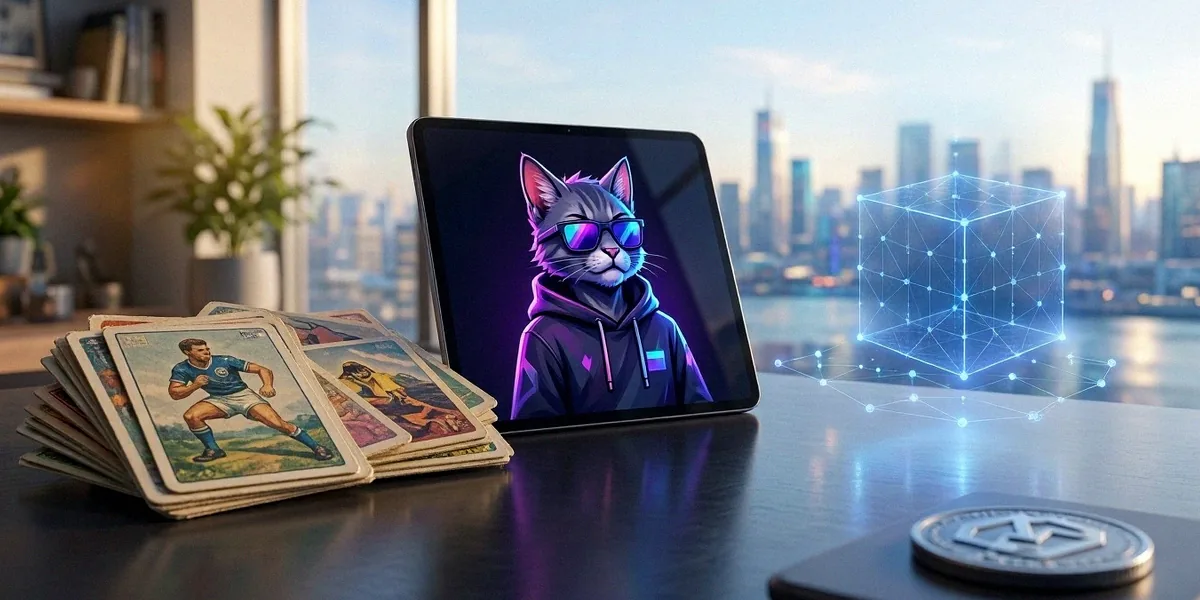
There was a time when the thrill of collecting lived in your hands — the crinkle of a foil packet, the smell of stale bubblegum, the heart-racing moment you peeled back the wrapper to reveal a shiny. We all remember swapping duplicates in the schoolyard and guarding our prized cards like treasure. But somewhere between the cardboard era and the crypto boom, collectibles went digital. So when did pixels start to feel as valuable as print? Let’s trace the journey from footy cards to blockchain, and look at what it means for digital art Australia-wide.
The Pre-Digital Era: Trading Cards and the Urge to Collect
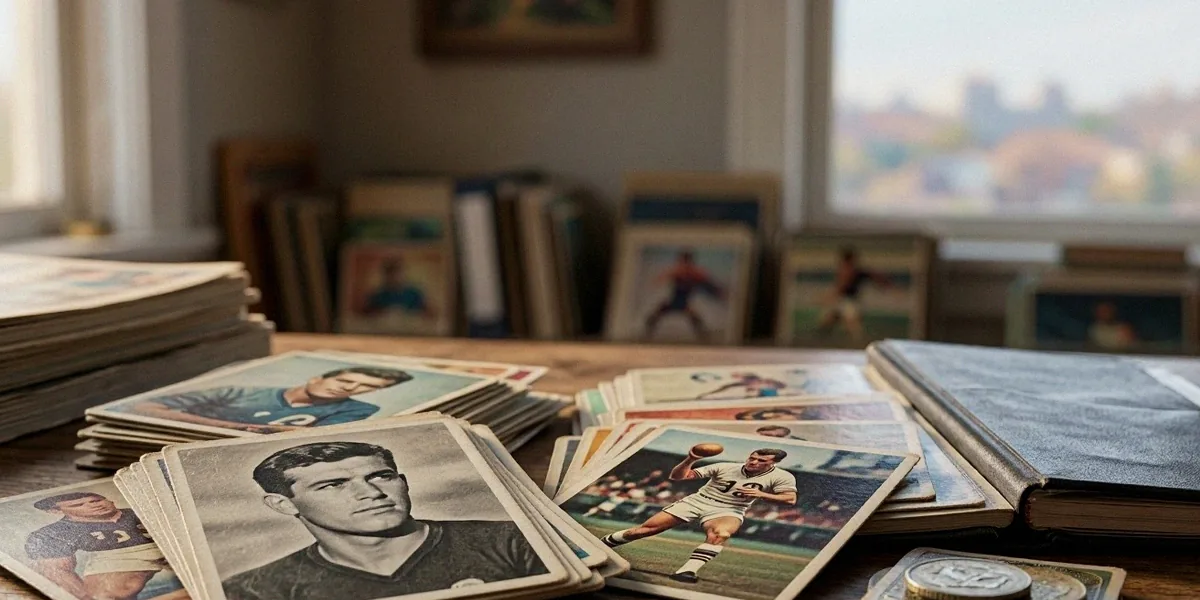
Long before anyone minted a token, the collecting instinct was already hardwired into us. Trading cards gave ordinary people a cheap, addictive way to chase rarity — and the format hasn’t really changed in over a century.
From Cigarette Cards to Bubblegum Empires
The first mass-market trading cards weren’t sold in hobby shops. They were tucked into cigarette packets in the late 1800s, acting as stiffeners and miniature advertisements for everything from actors to military heroes. When tobacco companies realised people were collecting the full sets, a marketing phenomenon was born.
The format migrated to bubblegum and confectionery, and by the mid-20th century, Topps had turned baseball cards into an American institution. Panini followed in Europe, dominating football stickers and World Cup albums. The formula was simple: print a set, hide a few rare cards, and watch collectors chase the gaps in their binders.
Australia’s Footy Card Obsession: Scanlens and Select
Here in Australia, the same urge played out across the AFL and NRL. Scanlens defined the golden era of footy cards from the 1960s through the 1980s — those distinctive designs and player portraits are still traded and graded today. Select later took up the mantle, producing modern sets with signature cards, numbered inserts and memorabilia patches that sell for serious money. For generations of Aussie kids, Scanlens and Select weren’t just cards; they were the entry point into a lifelong habit of collecting.
The First Digital Collectibles: CDs, Games, and Online Avatars
As computers moved into Australian homes, collecting quietly changed shape. The objects were no longer physical, but the psychology was identical — rare items, limited drops, and bragging rights.
Virtual Items in Early Online Worlds
Games were the gateway. Pokémon titles on the Game Boy let players trade and hoard creatures, turning a single cartridge into a personal collection. Then came the internet, and with it virtual economies that felt astonishingly real.
- Neopets had millions of users hunting rare paint brushes, codestones and limited-edition pets — many Australian kids included.
- World of Warcraft offered mounts, pets and transmog gear that players grinded for months to obtain, and rare drops carried genuine status.
- CD-ROM era games bundled “collector’s editions” with digital art books and in-game bonuses, normalising the idea of paying extra for digital goods.
None of it was on a blockchain, but the foundations were laid: scarcity, provenance and community all existed in digital form.
When Digital Art Australia Found Its First Collectors
Alongside games, digital artists began finding audiences online. Early internet communities meant an artist in Melbourne or Perth could sell or share work with people in Tokyo or Berlin. The idea of “owning” a digital file was still fuzzy, but the appetite for digital art Australia-wide was clearly growing.
Pixel Art and the Rise of Indie Digital Collecting
Of all the digital art forms, pixel art has the strongest claim to being a genuine collectible aesthetic. Its constraints — a grid, a limited palette — force discipline, and that discipline produces work that feels handmade.
Pixel Art as a Collectible Aesthetic
Platforms like DeviantArt gave pixel artists a place to build followings, while Minecraft turned an entire generation into pixel-art creators and consumers. Limited digital editions, commissions and one-off sprite sheets became a quiet economy of their own. Pixel art carried nostalgia for 8-bit and 16-bit gaming, which made it emotionally resonant in a way that glossy 3D renders often weren’t.
Australian Pixel Artists and Their Global Reach
Australian pixel artists have punched well above their weight. Working from studios and bedrooms across the country, they’ve contributed to indie games, sold limited edition prints and digital packs, and built international fanbases through Discord and Twitter. The lesson was clear: a small, dedicated community can sustain an artist without any traditional gallery.
Generative Art and the Blockchain Boom
Generative art — where an artist writes rules or code and the output is produced by a system — is older than most people realise. Vera Molnár was experimenting with algorithmic drawing in the 1960s, decades before anyone mentioned a blockchain.
What Makes Generative Art Collectible?
Generative art is collectible because each output is unique within a defined system. Collectors aren’t just buying an image; they’re buying a place in the algorithm’s possibility space. That concept exploded in popularity when Art Blocks popularised generative art on the blockchain, letting artists release code-driven drops that minted thousands of unique outputs in minutes.
Blockchain’s Promise: Scarcity, Provenance, and Hype
Blockchain added two things the digital world had always struggled with: provable scarcity and transparent provenance. A token could be limited to a set number, and its ownership history was publicly verifiable. CryptoPunks and Bored Ape Yacht Club became landmark NFT collections, turning pixel portraits and cartoon apes into status symbols worth eye-watering sums at the peak of the boom. Some of that was genuine cultural shift; some of it was pure hype. Both were real, and both mattered.
NFT Scams and the Australian Reality Check
Wherever money and hype collide, scammers follow. The NFT space has been no exception, and Australian collectors have been caught in the crossfire.
How NFT Scams Work and Who They Target
Most NFT scams fall into a handful of recognisable patterns:
- Rug pulls — developers hype a project, take mint funds, then vanish with the money and abandon the roadmap.
- Phishing — fake mint sites and Discord DMs trick users into signing wallet approvals that drain their assets.
- Wash trading — fake sales between colluding wallets inflate prices and lure in genuine buyers.
- Fake giveaways — “free mint” links that require a wallet connection and steal everything inside it.
Newer collectors chasing quick profits are the prime targets, especially during a hot market when FOMO overrides caution.
Australian Regulation and Consumer Warnings
Australian regulators have taken notice. ASIC and the ACCC have both issued warnings about NFT scams in Australia, flagging the risks of unregulated offerings, misleading marketing and the near-impossibility of recovering funds once crypto leaves your wallet. The ACCC’s Scamwatch has repeatedly urged Australians to treat unsolicited crypto and NFT offers with suspicion. Our advice: verify contracts, use hardware wallets, never sign blind approvals, and treat anything promising guaranteed returns as a red flag.
What’s Next for Digital Collectibles in Australia?
The market has cooled from its peak, but the underlying technology hasn’t gone away. Instead, it’s maturing into something more practical.
Tokenised Physical Items and Hybrid Collecting
One of the most promising directions is hybrid collecting — a physical item paired with a digital token that proves authenticity and tracks ownership. Imagine a Select footy card with a matching on-chain record, or a signed print with a verifiable digital certificate. This bridges the tactile appeal of the pre-digital era with the transparency of blockchain.
The Future of Digital Art Australia and Beyond
Gaming integrations are also deepening, with in-game items increasingly portable across ecosystems. Meanwhile, more artists and platforms are moving toward lower-energy blockchains to address environmental concerns. For Australian collectors, the trends worth watching are tokenised physicals, gaming crossovers, and sustainable infrastructure — not the next speculative meme coin.
FAQ
What was the first digital collectible?
There’s no single “first,” but early examples include Pokémon traded on Game Boy link cables, Neopets items in the late 1990s, and rare World of Warcraft mounts in the 2000s. Blockchain-based collectibles only arrived with CryptoPunks in 2017.
Are NFT scams common in Australia?
Yes. ASIC and the ACCC have both issued warnings about NFT scams in Australia, with rug pulls, phishing and wash trading among the most reported schemes. Recovery of lost funds is rare, so prevention is everything.
What makes generative art valuable?
Generative art is valued for its uniqueness within a defined system, the reputation of the artist, and the provable scarcity of each output. Art Blocks helped popularise the format by making code-driven drops accessible to collectors.
Is pixel art still collectible today?
Absolutely. Pixel art retains a strong collector base thanks to its nostalgia, craft and community ties. Australian pixel artists continue to sell limited editions and digital packs to global audiences.
Should Australian collectors still buy digital collectibles?
If you enjoy the art or the community, yes — but treat it as a collectible, not an investment. Verify sources, avoid hype-driven mints, and stay across guidance from ASIC and the ACCC.
The technology behind collectibles has changed dramatically — from cigarette cards to Scanlens footy cards, from Neopets to Art Blocks, from cardboard to code. But the instinct that drives us to collect hasn’t budged an inch. Australians should stay curious about where digital art and collectibles go next, while keeping a healthy dose of scam-awareness in the mix. Chase the thrill, not the hype.